Virginia Highway Merging Laws: Rules & How to Avoid Tickets
Get Your CertificateUnderstand Virginia's highway merging rules, who has the right of way, and how to avoid traffic tickets when entering or exiting interstates.
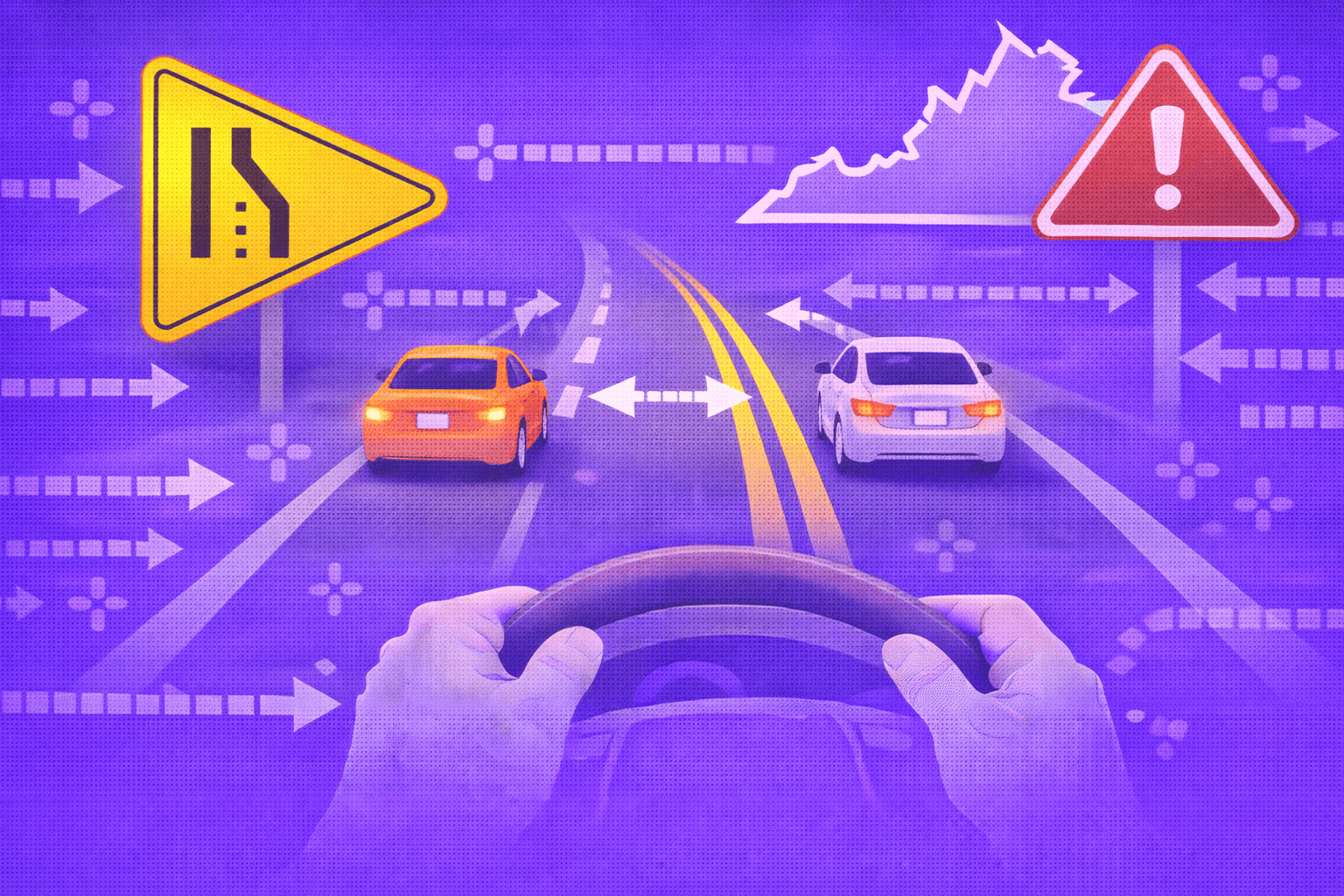
Highway Merging in Virginia: The Legal Framework
Every day, Virginia drivers navigate the merging challenge: you're accelerating down an on-ramp, traffic is flowing at 65 mph on the interstate, and you need to find a gap. It seems straightforward — but getting it wrong can result in a crash, a traffic citation, or both. Understanding Virginia's merging laws takes the guesswork out of highway driving and helps you stay safe and citation-free.
Virginia law doesn't use the phrase "zipper merge" or "courtesy merge" — it deals in right-of-way rules. The relevant statute is Virginia Code § 46.2-821, which addresses failure to yield when entering a highway from a private road or on-ramp. The core principle is simple: traffic already on the main roadway has the right of way over vehicles entering from an acceleration lane or on-ramp.
Who Has the Right of Way When Merging?
When you are on an on-ramp entering an interstate or highway, you are legally required to yield to vehicles already traveling in the travel lanes. The vehicles on the main road do not have to slow down, change lanes, or make room for you — although courteous drivers often do. Your job as the merging driver is to match the speed of traffic and find a safe gap to enter.
This is why on-ramps are designed with acceleration lanes: they give you space and time to build up speed so you can blend into highway traffic smoothly. Using the full length of the acceleration lane and matching traffic speed before merging is not just good driving technique — it's the safest and most legally correct approach.
The most dangerous merging mistakes happen when drivers slow down at the end of an acceleration lane or attempt to merge without checking mirrors and blind spots — both significantly increase collision risk and can result in a traffic citation.
Virginia's Rules for Lane Changes and Merging on the Highway
Once you're on the highway, merging between lanes is governed by Virginia Code § 46.2-848 (improper lane change) and § 46.2-804 (following too closely, which can overlap with unsafe merging). To make a legal lane change in Virginia, you must:
Signal your intent using your turn signal before changing lanes.
Check your mirrors and physically check your blind spot before moving over.
Ensure the adjacent lane is clear and that you have adequate space to complete the move safely.
Complete the lane change without forcing another driver to brake, swerve, or take evasive action.
Cutting off another driver during a lane change — even if you didn't intend to — can result in an unsafe lane change citation or, in more aggressive cases, a charge of aggressive driving. Virginia takes improper lane changes seriously, especially on high-speed interstates where the consequences of a collision are severe.
The Zipper Merge Debate in Virginia
You may have heard about the "zipper merge" — a technique where drivers in a lane that is ending continue to use it until the last possible moment and then alternate with traffic in the continuing lane, like the teeth of a zipper. Traffic engineers increasingly recommend this approach because it uses the full length of the closing lane and reduces overall congestion.
In Virginia, the zipper merge is legal. Staying in a lane until it ends and then merging in turn is not aggressive driving or cutting in line — it is proper lane usage. Drivers in the continuing lane are required to yield to vehicles completing a legal merge. However, the key word is "legal" — you must complete the merge before the lane physically ends, not after, and you must signal and merge smoothly rather than forcing your way in.
Merging When Exiting: What Drivers Often Get Wrong
Merging isn't just an entry issue — it also applies when you're exiting. Drivers who cut across multiple lanes of traffic at the last second to reach an exit ramp create serious hazards and can be cited for unsafe lane changes. The correct approach is to begin moving toward the right lane well in advance of your exit — ideally at least half a mile before your off-ramp.
Similarly, slowing dramatically on the main roadway before entering an exit ramp is dangerous and potentially illegal. You should maintain highway speed until you are actually on the deceleration lane, then slow down progressively as you approach the exit ramp speed advisory signs.
Traffic Violations Related to Merging
Several common Virginia traffic violations can arise from merging errors:
Failure to yield (§ 46.2-821): Entering a highway without yielding to existing traffic — typically 3 demerit points.
Improper lane change (§ 46.2-848): Changing lanes unsafely or without signaling — typically 3 demerit points.
Failure to signal (§ 46.2-848): Not using your turn signal when changing lanes — typically 3 demerit points. Learn more about Virginia failure-to-signal tickets.
Reckless driving: In extreme cases, an especially dangerous merge could be elevated to reckless driving, a criminal charge in Virginia. See our guide to Virginia reckless driving penalties.
Any of these violations will add demerit points to your record under the Virginia demerit points system and may affect your insurance rates. You can learn more about how tickets affect premiums in our post on how Virginia traffic tickets affect insurance rates.
How a Driver Improvement Course Can Help After a Merging Ticket
If you've received a citation related to merging or lane changing, enrolling in a Virginia DMV-approved driver improvement course is one of the most effective steps you can take. Completing the course earns you 5 positive safe driving points, which can offset the demerit points from your violation and help you avoid crossing into DMV mandatory action territory.
ABC Driving Improvement offers a fully online, 8-hour driver improvement course approved by the Virginia DMV. You can complete it on any device, on your own schedule — no classroom, no commuting, no stress. For just $74.99, you get the full course and a completion certificate recognized by Virginia courts and the DMV. Visit our Virginia courts driver improvement course page to learn more about how the certificate is accepted.
Frequently Asked Questions
Does the car already on the highway always have the right of way over a merging vehicle?
Yes — under Virginia law, traffic traveling on the main roadway has the right of way over vehicles entering from an on-ramp or acceleration lane. However, drivers on the highway are encouraged to be courteous and move to the left lane if safe to do so to allow merging traffic to enter. Courtesy is not legally required, but it is good practice and reduces overall highway congestion.
Is it legal to stay in the right lane and force merging traffic to slow down?
Technically, the driver on the highway is not legally required to yield to merging traffic. However, deliberately blocking a merging vehicle or brake-checking a driver who is trying to merge could be considered aggressive driving under Virginia law, which carries significant penalties. Safe, cooperative driving benefits everyone on the road.
Can I get a ticket for merging without signaling in Virginia?
Yes. Virginia law requires drivers to signal before changing lanes, including when merging from an on-ramp onto a highway. Failing to signal is a traffic infraction that can result in a fine and demerit points, even if the merge itself was executed safely. Always use your turn signal as a communication tool for other drivers around you.
Drive Smarter on Virginia Highways
Merging correctly is one of the most important skills for highway safety — and it's also an area where many drivers have developed bad habits without realizing it. Whether you're dealing with a recent ticket or just want to sharpen your skills, ABC Driving Improvement's online defensive driving course covers Virginia highway laws, merging rules, and safe driving techniques in a format that's easy to follow and completely online. Enroll today for just $74.99 and drive with confidence on Virginia's interstates and highways.
Dismiss Your Ticket Online
Virginia DMV-approved 8-hour driver improvement clinic. Complete at your own pace from any device.
Start Course — $74.99Why Choose ABC Driving Improvement?
Official Virginia clinic
Complete at your own pace, 24/7
Virginia drivers served
Based on verified reviews
Virginia drivers merging onto a highway must yield to traffic already on the road — failing to do so can result in a failure-to-yield citation and demerit points.
Which Course Code Do You Need?
Check your court paperwork or DMV letter for your assigned code.
Get Your Certificate