Virginia Aggressive Driving Charge: Laws, Fines, and What to Do Next
Get Your CertificateGot a Virginia aggressive driving charge? Learn the fines, demerit points, possible jail time, and how an online course can help you move forward.
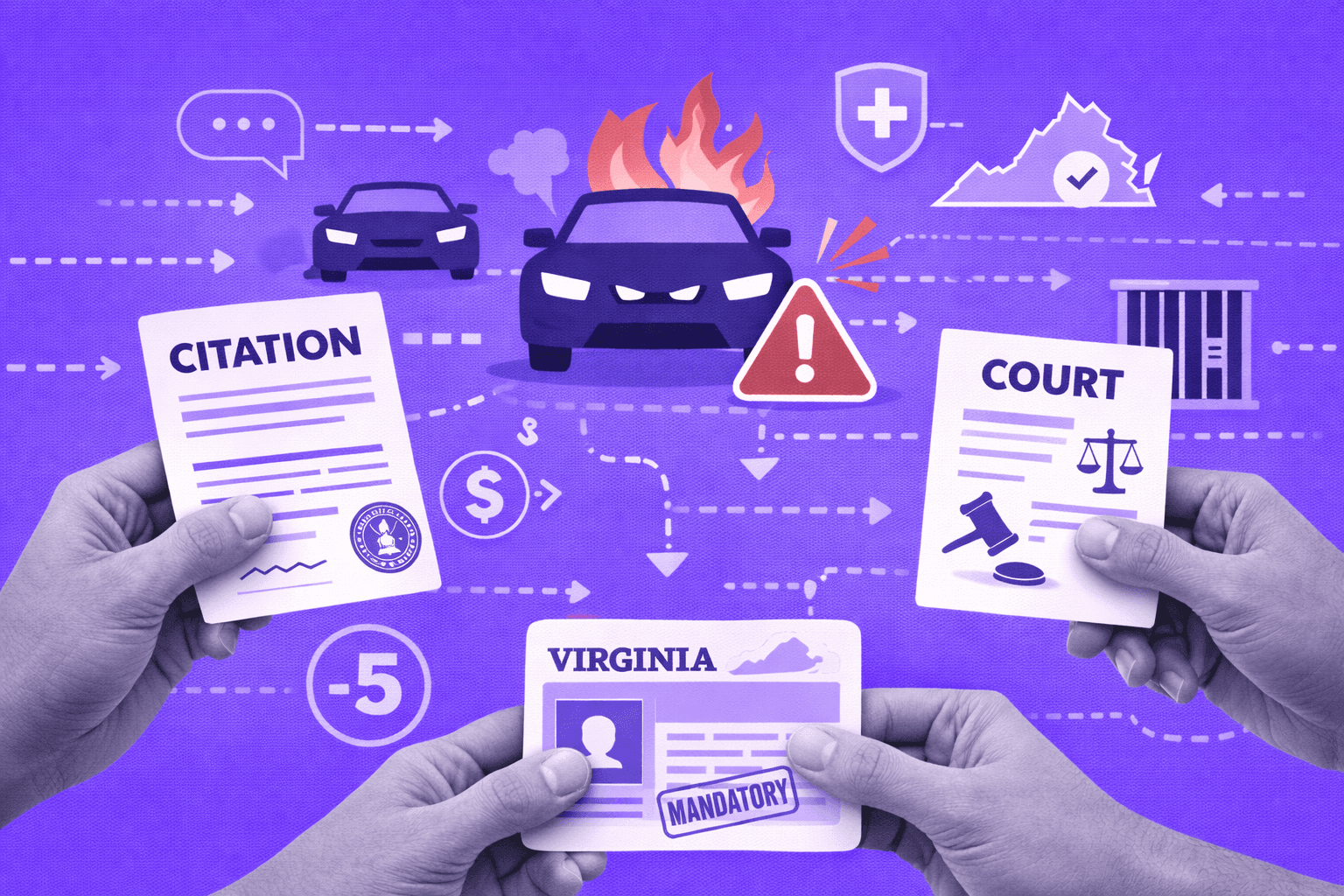
What Is Aggressive Driving in Virginia?
Virginia law defines aggressive driving under Code § 46.2-868.1. You can be charged with aggressive driving if you commit one or more of the following offenses with the intent to intimidate, injure, or obstruct another person:
Speeding (§ 46.2-870 through § 46.2-874)
Failure to give way when overtaken
Driving too closely (tailgating)
Failing to yield at an intersection or yield sign
Passing when unsafe
Running a red light or stop sign
Failure to signal
The critical word here is intent. Aggressive driving isn't just about what you did — it's about why you did it. Prosecutors must show that your actions were meant to intimidate or endanger another driver.
"Aggressive driving isn't just careless driving — it's legally defined behavior with criminal consequences that can impact your license, insurance, and criminal record."
Aggressive Driving vs. Reckless Driving in Virginia
Many drivers confuse aggressive driving with reckless driving, but they carry different charges and penalties.
Reckless driving (§ 46.2-852) is a Class 1 misdemeanor — Virginia's most serious traffic charge — and involves driving in a manner that endangers life, limb, or property.
Aggressive driving (§ 46.2-868.1) is a Class 2 misdemeanor unless the offense results in bodily injury to another person, in which case it becomes a Class 1 misdemeanor. In both cases, it's a criminal charge, not just a traffic infraction.
Virginia Aggressive Driving Fines and Penalties
Here's what you're looking at if convicted of aggressive driving in Virginia:
Class 2 Misdemeanor (no injury):
Fines up to $1,000
Up to 6 months in jail
3–6 DMV demerit points added to your driving record
Class 1 Misdemeanor (bodily injury involved):
Fines up to $2,500
Up to 12 months in jail
6 DMV demerit points on your record
Beyond the court penalties, an aggressive driving conviction can trigger insurance rate increases of 20–40% or more, and if you accumulate enough DMV demerit points, you risk license suspension.
How DMV Points Work With Aggressive Driving
Virginia uses a demerit point system to track driver behavior. Aggressive driving adds 3 to 6 demerit points to your record, depending on the specific underlying violations and how the court classifies the offense.
Here's why that matters:
12 points in 12 months triggers a mandatory driver improvement clinic
18 points in 12 months or 24 points in 24 months results in license suspension
If you're already carrying demerit points from a previous ticket, an aggressive driving charge could push you into license suspension territory quickly.
Can an 8-Hour Driver Improvement Course Help?
Yes — and here's how. Completing Virginia's DMV-approved 8-hour online driver improvement course is one of the most effective tools available after a traffic charge:
Earn 5 safe driving points — These positive points offset demerit points on your record
Satisfy court-ordered requirements — Many Virginia courts accept the driver improvement course as part of sentencing
Qualify for an insurance discount — Most Virginia insurers offer a reduction after course completion
Demonstrate good faith — Completing a course voluntarily shows the court and DMV you're committed to safer driving
You can complete the ABC Driving Improvement course entirely online, at your own pace, in as little as 8 hours. The certificate is delivered the same day you finish.
What to Do After a Virginia Aggressive Driving Charge
Getting charged doesn't mean getting convicted. Here are the steps most Virginia drivers take after receiving this charge:
1. Consult a traffic attorney. Because this is a criminal charge, speaking with an attorney before your court date is strongly recommended. A lawyer can sometimes negotiate the charge down or have it dismissed.
2. Complete a driver improvement course before your court date. Showing up to court with a completed driver improvement certificate demonstrates responsibility and can influence the outcome.
3. Gather evidence. Dashcam footage, witness statements, or evidence that no intimidation was intended can all help your case.
4. Appear in court. Aggressive driving requires a court appearance — you cannot simply prepay this ticket.
Frequently Asked Questions
Is aggressive driving in Virginia a criminal charge or just a traffic ticket?
It's a criminal charge. Aggressive driving is classified as a Class 2 misdemeanor (or Class 1 if someone is injured), which means it goes on your criminal record, not just your driving record.
How many DMV points does aggressive driving add in Virginia?
Aggressive driving adds 3 to 6 demerit points to your Virginia driving record. The exact number depends on the specific violations cited and the court's determination.
Will aggressive driving raise my car insurance in Virginia?
Yes. A criminal traffic conviction like aggressive driving typically causes significant insurance rate increases — often 20% or more. Completing a DMV-approved driver improvement course may help offset this by qualifying you for a discount.
Don't Face This Alone — Take Action Today
A Virginia aggressive driving charge is serious, but you have options. Taking a Virginia driver improvement course is one of the fastest, most effective steps you can take right now to protect your license and reduce the impact on your insurance.
ABC Driving Improvement offers Virginia's DMV-approved 8-hour online driver improvement course for just $74.99 — completed 100% online with same-day certificate delivery.
Dismiss Your Ticket Online
Virginia DMV-approved 8-hour driver improvement clinic. Complete at your own pace from any device.
Start Course — $74.99Why Choose ABC Driving Improvement?
Official Virginia clinic
Complete at your own pace, 24/7
Virginia drivers served
Based on verified reviews
Virginia aggressive driving is a criminal charge with fines up to $2,500, up to 6 DMV demerit points, and possible jail time — but completing an 8-hour driver improvement course can help protect your record and lower your insurance.
Which Course Code Do You Need?
Check your court paperwork or DMV letter for your assigned code.
Get Your Certificate