Virginia Wrong Way Driving: Penalties, Fines & What to Do Next
Get Your CertificateA Virginia wrong way driving charge carries serious fines and DMV demerit points. Learn the penalties and how a driver improvement course can help.
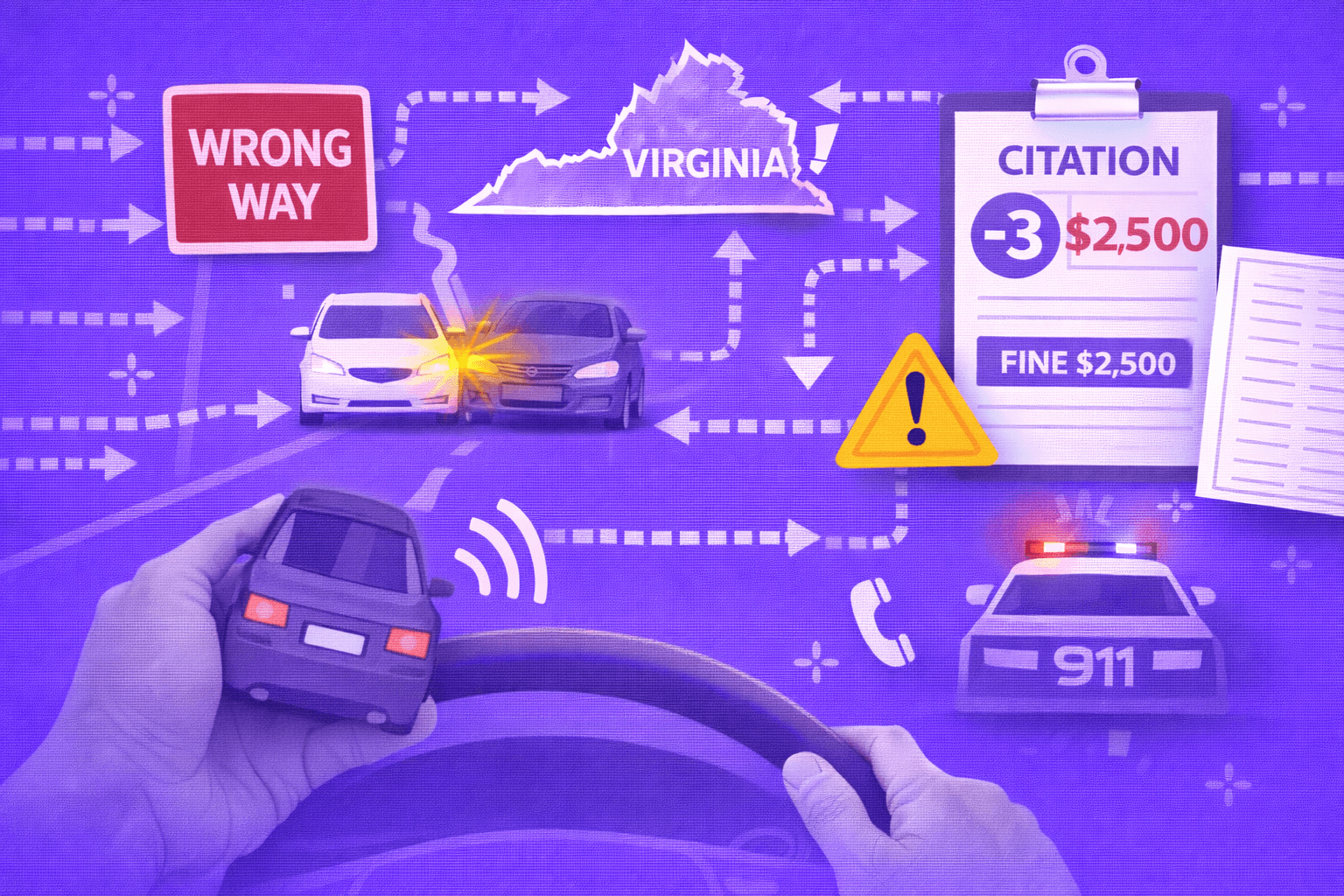
Getting caught driving the wrong way in Virginia — whether on a one-way street, against traffic on a divided highway, or entering a road from the wrong direction — is a serious traffic offense. Wrong way driving endangers everyone on the road and Virginia law treats it accordingly, with real consequences for your driving record, your wallet, and potentially your freedom.
If you've received a wrong way driving charge in Virginia, here's everything you need to know about what you're facing — and what you can do to minimize the damage.
How Virginia Law Classifies Wrong Way Driving
Virginia doesn't have a single statute called "wrong way driving." Instead, these offenses are charged under several Code of Virginia sections depending on the circumstances:
Va. Code § 46.2-808 — Driving on the wrong side of a divided highway
Va. Code § 46.2-830 — Failure to obey highway signs and markings (including do-not-enter and wrong-way signs)
Va. Code § 46.2-804 — Driving on the wrong side of the road
Reckless driving (Va. Code § 46.2-852) — In extreme cases, wrong way driving that endangers others can be charged as reckless driving
The charge you receive determines the fines and DMV points that apply. Understanding the specific charge on your ticket is critical before deciding how to respond.
Wrong way driving is one of the deadliest traffic behaviors on Virginia roads — VDOT data shows wrong-way crashes are significantly more likely to result in fatalities than other crash types.
Virginia Wrong Way Driving Fines and Penalties
Penalties vary based on how the offense is charged. As a standard traffic infraction, you can expect fines ranging from $30 to $250 and 3 DMV demerit points on your Virginia driving record, with the violation staying on your record for 3 years.
If wrong way driving escalates to a reckless driving charge — Virginia's most serious traffic offense — the stakes rise dramatically. Reckless driving carries fines up to $2,500, up to 6 DMV demerit points, possible jail time of up to 12 months, a criminal record entry, and a conviction that stays on your driving record for 11 years. If you've been charged with reckless driving related to wrong way driving, consult a Virginia traffic attorney before your court date.
How DMV Points Work After a Wrong Way Driving Charge
Virginia's DMV point system runs from -18 to +5. A wrong way driving conviction adds 3–6 demerit points depending on the charge. Accumulating 18 points in 12 months or 24 points in 24 months triggers mandatory license suspension.
The most effective way to offset these demerit points is to earn 5 safe driving points by completing a Virginia DMV-approved driver improvement course. This won't erase the conviction, but it helps balance your point total and keeps you further from suspension.
What to Do After a Virginia Wrong Way Driving Charge
Step 1: Read Your Ticket Carefully
Check whether you're charged with a simple traffic infraction or reckless driving. The specific statute cited on your ticket tells you the severity of the charge and what court, if any, you need to appear in.
Step 2: Decide How to Respond
You have three options: pay the ticket (pleading guilty), contest it in court, or hire an attorney to negotiate a reduction. For standard infractions, many drivers simply pay. For reckless driving charges, appearing in court or hiring an attorney is strongly recommended.
Step 3: Take a Driver Improvement Course
Completing Virginia's 8-hour driver improvement course earns you 5 safe driving points to offset demerit points. Courts also view proactive course completion favorably when considering penalty reductions.
Step 4: Submit Your Certificate
After completing the course, submit your completion certificate to the Virginia DMV to receive your safe driving points credit.
FAQ: Virginia Wrong Way Driving
Q: Will a wrong way driving ticket raise my insurance in Virginia?
A: Yes, most likely. Any moving violation conviction in Virginia can trigger an insurance rate increase, especially one that results in demerit points. Taking a driver improvement course can help demonstrate responsibility and may qualify you for a discount through your insurer.
Q: How long does a wrong way driving conviction stay on my Virginia record?
A: A standard traffic infraction stays on your Virginia driving record for 3 years. A reckless driving conviction stays for 11 years and also appears on your criminal background check — which is why it's taken so much more seriously.
Q: Can I get a wrong way driving charge reduced or dismissed in Virginia?
A: It depends on the circumstances and the court. Some judges will agree to reduce a charge — for example, from reckless driving down to a basic infraction — especially if you have a clean driving history and have completed a driver improvement course. An experienced Virginia traffic attorney can advise you on your specific options.
Get Help Protecting Your Driving Record
A wrong way driving charge doesn't have to define your driving record. ABC Driving Improvement's fully online, Virginia DMV-approved 8-hour course is one of the most effective tools you have for earning back safe driving points and showing the court you're committed to safer driving.
Ready to take action? Enroll today at ABCDrivingCourse.com for just $74.99. Available 24/7 on any device at your own pace.
Dismiss Your Ticket Online
Virginia DMV-approved 8-hour driver improvement clinic. Complete at your own pace from any device.
Start Course — $74.99Why Choose ABC Driving Improvement?
Official Virginia clinic
Complete at your own pace, 24/7
Virginia drivers served
Based on verified reviews
Wrong way driving in Virginia is treated as a serious traffic offense that can result in steep fines, 3–6 DMV demerit points, and in some cases criminal charges — completing a driver improvement course can help protect your record.
Which Course Code Do You Need?
Check your court paperwork or DMV letter for your assigned code.
Get Your Certificate