Virginia Window Tint Laws: What's Legal and What Will Cost You
Get Your CertificateLearn Virginia's legal window tint limits, medical exemptions, inspection requirements, and penalties. Avoid costly fines—know the rules.
Understanding Virginia's Window Tint Regulations
Window tinting has become increasingly popular among Virginia drivers for its aesthetic appeal and UV protection benefits. However, Virginia has specific regulations governing how dark your window tint can be, and violating these laws can result in significant fines and complications during your vehicle inspection. If you're considering window tint or already have it installed, understanding the legal limits is essential to avoid penalties and ensure your vehicle passes state inspection.
Virginia's window tint laws are designed to balance driver privacy and UV protection with public safety concerns—primarily ensuring law enforcement can see inside vehicles and that drivers maintain adequate visibility. The state uses Visible Light Transmission (VLT) percentages to measure how much light passes through tinted windows, with lower percentages indicating darker tint.
Virginia's Legal Window Tint Limits by Window Type
Virginia's window tint regulations specify different allowable darkness levels depending on which windows you're tinting. Understanding these distinctions is critical before purchasing and installing aftermarket tint.
Front Side Windows
For the front doors on either side of your vehicle, Virginia allows a minimum of 50% Visible Light Transmission (VLT). This means at least half of the light must pass through the tint. This is a relatively light tint—darker than stock windows but not heavily tinted. If you're looking for moderate sun protection and privacy in the front of your vehicle, 50% VLT is the darkest legal option.
Rear Side Windows
The rear side windows (passenger windows behind the rear doors) can be tinted darker. Virginia permits a minimum of 35% VLT for rear side windows. This allows for noticeably darker tint, providing better privacy and additional UV protection in the rear of the vehicle.
Rear Window (Back Glass)
Your vehicle's rear window can also have 35% VLT minimum tint, the same as rear side windows. This allows for consistent darkening across the rear of the vehicle.
Windshield Tinting
Virginia has unique rules for windshield tinting. You are only allowed non-reflective tint above the AS-1 line (the line marked on your windshield by manufacturers, typically about 4-5 inches from the top). Below the AS-1 line, no tint is permitted. This regulation ensures that the driver's primary viewing area remains clear and unobstructed, maintaining safety for both the driver and other road users.
Important Distinctions: Factory vs. Aftermarket Tint
One common source of confusion involves the difference between factory-installed tint and aftermarket tint. Many newer vehicles come with factory tint on rear windows and back glass. Factory tint is typically legal regardless of darkness level, as manufacturers design vehicles to meet state regulations. However, this doesn't mean all aftermarket tint installed by third parties is legal.
When you install aftermarket window tint, you must ensure it meets Virginia's legal limits. Many tint shops can measure your tint's VLT to confirm it complies with state law. If you purchase a used vehicle with aftermarket tint that's too dark, you're responsible for bringing it into compliance—it won't automatically be legal just because it was already installed.
Medical Exemptions for Window Tint
Virginia recognizes that some individuals have legitimate medical reasons for darker window tint, particularly those with photosensitivity disorders, lupus, porphyria, and other light-sensitive conditions. If you have a qualifying medical condition, Virginia allows a medical exemption to permit darker tint than otherwise legal.
How to Apply for a Medical Exemption
To obtain a medical exemption in Virginia:
Obtain medical documentation: Your physician must provide written documentation of your medical condition and explain why darker window tint is medically necessary.
Contact the Virginia DMV: Submit your medical documentation to the Virginia Department of Motor Vehicles. You may need to apply through your local DMV office.
Display your exemption card: If approved, you'll receive a medical exemption card that must be displayed in your vehicle, typically on the driver's side sun visor.
Understand limitations: A medical exemption may allow darker tint than the legal limit, but the exemption only protects you from penalties if you're stopped by law enforcement. You'll still need to pass vehicle inspection.
How Window Tint Is Measured During Inspections
During Virginia's annual vehicle inspection, inspectors may check your window tint compliance. Understanding how this process works can help you prepare your vehicle.
VLT Meters: Inspectors use specialized Visible Light Transmission meters to measure how much light passes through your tinted windows. These devices are placed against the glass and provide a precise percentage reading. This is an objective measurement—your tint either meets the 50% and 35% minimums or it doesn't.
Multiple window testing: Inspectors typically check both front side windows and rear windows to ensure each meets requirements. If any window fails the tint test, your vehicle will fail inspection and you must bring it into compliance before passing.
Penalties for Illegal Window Tint in Virginia
If you're caught driving with illegal window tint in Virginia, you face meaningful penalties that extend beyond just a fine.
Fines
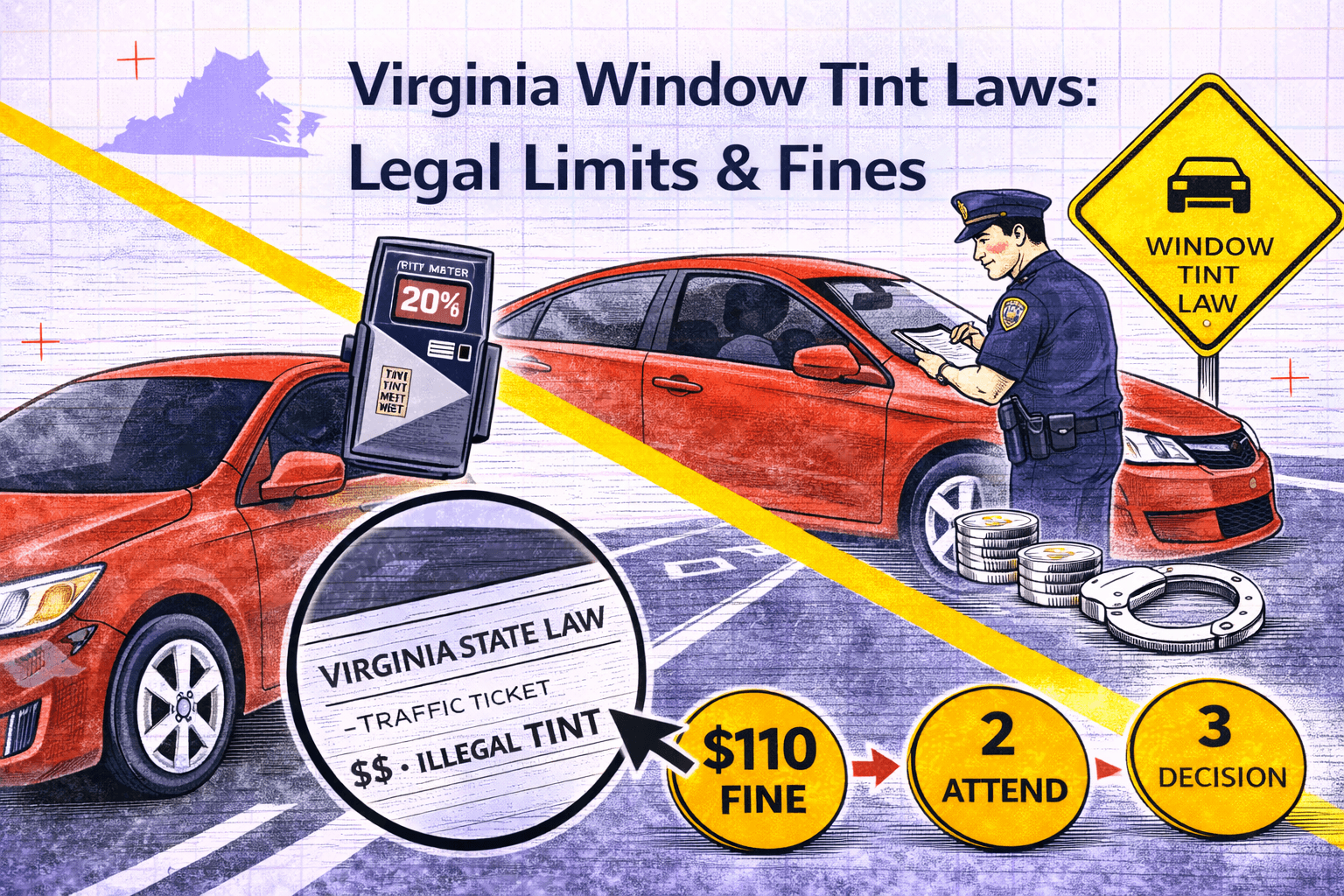
Illegal window tint violations in Virginia typically result in a fine of approximately $110. While this might not seem excessive compared to other traffic violations, it's the beginning of your troubles.
Removal Timeline
More significantly, you'll be ordered to remove the tint within 15 days. This is a mandatory requirement. Failure to remove illegal tint within this timeframe can result in additional charges and continued violation citations.
Additional Legal Consequences
If you don't comply with the removal order, you may face:
Additional fines for failure to comply
Continued citations if you continue driving the vehicle
Suspension of vehicle registration
Complications when attempting to renew your vehicle registration
Common Misconceptions About Virginia Window Tint
Several myths persist regarding window tint legality in Virginia. Let's clear up some common confusion:
Myth: All factory tint is legal, so I can match it with aftermarket
Reality: While factory tint is legal, aftermarket tint must meet Virginia's specific VLT requirements. Factory tint on a luxury vehicle might be darker than Virginia allows for aftermarket installation. Always verify the VLT of aftermarket tint before installation.
Myth: I can have darker tint on rear windows because no one sees inside
Reality: While rear windows do allow darker tint (35% VLT vs 50% for front), there are still legal limits. "Limo tint" or extremely dark aftermarket tint violates Virginia law regardless of window location.
Myth: A medical exemption exempts me from vehicle inspection
Reality: Medical exemptions protect you from traffic citations but not necessarily from vehicle inspection failures. Discuss with your inspector whether your exemption applies to inspection requirements.
Why Window Tint Compliance Matters for Virginia Inspections
Virginia's annual vehicle inspection is required to maintain your vehicle registration. Failing the tint test means your entire inspection fails—you won't be able to register your vehicle legally until you address the problem. For many drivers, this creates an urgent situation where they must remove tint immediately to maintain legal driving status.
Additionally, if you're stopped by law enforcement and your tint is illegal, officers have grounds for a traffic stop. While a window tint violation might seem minor, it opens the door to further scrutiny and potential additional citations.
Tips for Staying Compliant
To ensure your window tint complies with Virginia law:
Work with reputable shops: Use established tint shops that understand Virginia regulations. They should be able to recommend legal tint options that meet your needs.
Request VLT verification: Ask your installer to measure the final VLT of your installed tint to confirm compliance.
Check before purchasing used vehicles: If buying a used car with existing tint, verify it meets Virginia's requirements before completing the purchase.
Explore alternatives: If darker tint is important to you, consider UV-protective films that are lighter but still provide sun protection, or evaluate whether a medical exemption applies to your situation.
Defensive Driving and Vehicle Compliance
Understanding Virginia's traffic laws—including window tint regulations—is part of being a responsible driver. Many drivers are surprised to learn they're violating window tint laws simply because they didn't realize the specific requirements. Taking time to educate yourself about regulations helps you avoid costly fines and inspection failures.
If you're looking to deepen your knowledge of Virginia traffic laws and defensive driving techniques, ABC Driving Improvement offers a comprehensive 8-hour online driver improvement course approved by the Virginia DMV. The course covers state traffic laws, defensive driving strategies, and practical safety techniques. At just $74.99 for the complete 100% online course, it's an affordable way to brush up on Virginia regulations and potentially reduce your insurance rates through a defensive driving discount. Enroll today and drive with confidence knowing you understand Virginia's traffic laws.
Conclusion
Virginia's window tint laws are specific and enforced during vehicle inspections and traffic stops. Remember that front side windows must allow at least 50% light transmission, rear windows must allow at least 35%, and windshield tint is restricted to above the AS-1 line. Medical exemptions are available for qualifying conditions, but require proper documentation. Violating these rules results in $110 fines and mandatory removal within 15 days. By understanding these regulations upfront, you can make informed decisions about vehicle customization and avoid the complications of driving with illegal tint in Virginia.
Dismiss Your Ticket Online
Virginia DMV-approved 8-hour driver improvement clinic. Complete at your own pace from any device.
Start Course — $74.99Why Choose ABC Driving Improvement?
Official Virginia clinic
Complete at your own pace, 24/7
Virginia drivers served
Based on verified reviews
Which Course Code Do You Need?
Check your court paperwork or DMV letter for your assigned code.
Get Your Certificate