Virginia Tailgating Laws: Penalties for Following Too Closely
Get Your CertificateLearn Virginia's tailgating laws, penalties, and safe following distance. Understand the risks and consequences of following too closely.
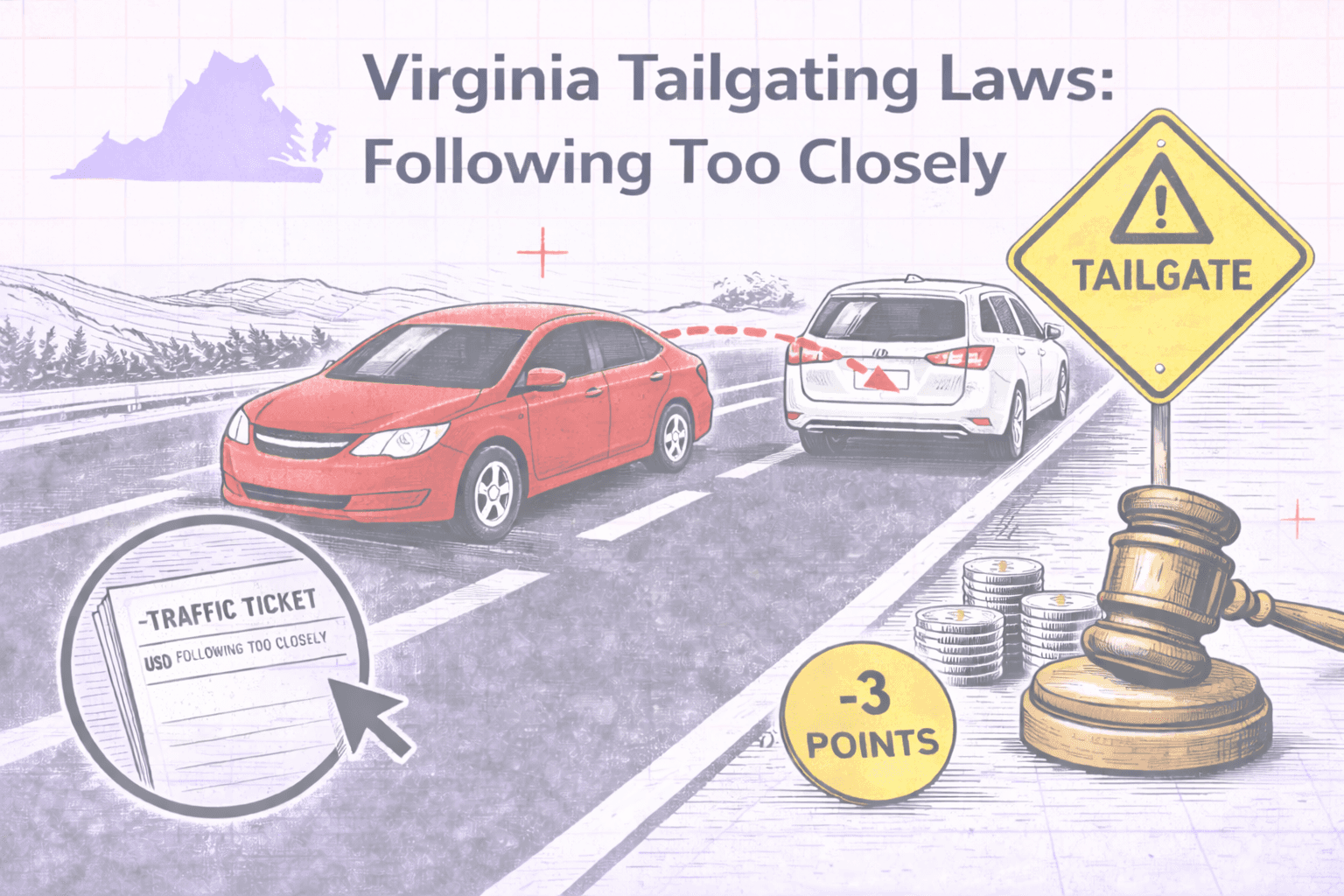
Virginia Tailgating Laws: Everything You Need to Know
Tailgating—following another vehicle too closely—is one of the most common aggressive driving behaviors on Virginia roads and one of the most dangerous. Not only is tailgating illegal under Virginia law, but it significantly increases your risk of causing a serious collision. Understanding Virginia's tailgating laws, the penalties involved, and how to maintain a safe following distance is essential for every driver.
Virginia Code § 46.2-816: The Law Against Tailgating
Virginia tailgating is codified in Virginia Code § 46.2-816, which states that drivers must maintain a safe and reasonable distance between their vehicle and the one ahead. The law specifically prohibits following another vehicle more closely than is reasonable and prudent, considering current speed, traffic, and road conditions.
This statute doesn't specify a exact number of feet or meters; instead, it requires drivers to use judgment and adjust their following distance based on circumstances. This flexibility allows officers to cite tailgating across a wide variety of road conditions and speeds.
What Constitutes Tailgating in Virginia?
Tailgating occurs when you follow another vehicle so closely that you cannot maintain control of your car if the vehicle ahead suddenly brakes or stops. The determination of what is "too close" depends on several factors:
Speed: At higher speeds, you need greater following distance
Weather: Rain, fog, ice, and snow reduce visibility and traction
Road Type: Highway driving differs from city street driving
Traffic Density: Heavy traffic may justify closer spacing, but stopping distance remains a factor
Vehicle Type: Large trucks require more stopping distance than passenger cars
Your Braking Ability: Worn brakes or an older vehicle may require greater distance
Police officers use their judgment to determine whether a driver is following too closely, often comparing the distance to the vehicle length rule or considering the driver's ability to stop safely.
The Three-Second Rule for Safe Following Distance
Virginia traffic safety experts recommend using the three-second rule as a practical guideline for maintaining safe following distance:
Pick a fixed point on the road ahead (a sign, mile marker, or road feature)
When the vehicle ahead passes the point, start counting: "one Mississippi, two Mississippi, three Mississippi"
Your vehicle should not reach that same point before you finish counting
If you reach it before finishing your count, you're following too closely
This three-second buffer gives you time to react to sudden braking and reduces your stopping distance from a dangerously close range. In poor weather or at high speeds, increase this to four or five seconds.
Penalties for Tailgating in Virginia
Tailgating in Virginia is a traffic violation that carries real consequences:
4 Demerit Points: Added to your driving record by the Virginia DMV
Fines: Typically ranging from $100 to $250, depending on circumstances and the judge
Court Costs: Additional fees imposed by the court handling your case
Accumulating demerit points can lead to license suspension if you receive too many violations within a certain period. Virginia's point system is strict—accumulating 18 points in 12 months results in a 12-month license suspension.
Tailgating in Different Conditions and Locations
Rain and Wet Conditions: Wet roads reduce tire traction and increase stopping distance. Officers are particularly vigilant about tailgating during rain, and tailgating in wet conditions is especially dangerous. Increase your following distance to at least 6-8 seconds in rain.
Fog and Low Visibility: Fog severely limits visibility and makes it impossible to judge safe following distance. Many serious pile-ups occur on foggy days when drivers follow too closely. Slow down and increase your following distance significantly.
Highway Driving: At highway speeds (60+ mph), tailgating is particularly dangerous because stopping distances are much longer. A vehicle traveling 65 mph covers about 95 feet per second. Maintain at least an 8-10 second following distance on highways.
City Driving: While speeds are lower in urban areas, stop-and-go traffic can still make tailgating hazardous. Maintain a cushion of space even in city traffic to allow for emergency stops.
Tailgating and Aggressive Driving
Virginia recognizes aggressive driving as a distinct offense, and tailgating is often considered a component of it. Virginia Code § 46.2-802 defines aggressive driving as a pattern of driving behavior that endangers people or property. This can include:
Repeatedly tailgating (following closely over an extended distance)
Tailgating combined with other aggressive behaviors like flashing lights or honking
Tailgating in an attempt to intimidate another driver or force them off the road
Tailgating while speeding or in conjunction with other traffic violations
Aggressive driving charges are more serious than simple tailgating violations and can result in higher fines, more demerit points, or even criminal charges in extreme cases.
Impact on Insurance Rates
A tailgating violation will appear on your driving record and can cause your insurance rates to increase. Insurance companies view traffic violations as indicators of risky driving behavior. A single tailgating citation might increase your premiums by 10-20% or more, depending on your insurance company and driving history.
If your tailgating violation resulted in a collision, the insurance impact is even more severe. At-fault accident claims can increase your rates for three to five years and may even lead to policy cancellation.
How to Maintain Safe Following Distance
Developing the habit of maintaining safe following distance requires conscious effort but is one of the most important safety practices you can adopt:
Use the Three-Second Rule: Apply this technique consistently, especially in traffic
Anticipate Stops: Watch ahead for brake lights and slow down early, giving the car ahead more space
Adjust for Speed: Increase following distance proportionally as speeds increase
Monitor Your Speedometer: Faster speeds require exponentially longer stopping distances
Reduce Speed in Poor Conditions: Rain, fog, ice, and dark conditions all demand greater following distance
Avoid Distraction: Tailgating often occurs when drivers aren't fully attentive; stay focused on the road
Never Engage Tailgaters: If someone tailgates you, don't brake-check or engage; simply let them pass safely
Tailgating as a Road Rage Trigger
Tailgating is frequently used as an aggressive tactic to intimidate other drivers or force them to speed up or move out of the way. This behavior can escalate into road rage confrontations and dangerous situations. If you're tailgated, remember:
Don't take it personally—respond calmly and safely
Don't brake-check or attempt to slow the aggressive driver
Allow the tailgater to pass when safely possible
Never engage in eye contact or gestures that might escalate the situation
If the behavior is threatening, contact law enforcement
Similarly, don't use tailgating as a way to express frustration with another driver. It's illegal, dangerous, and can lead to tragic consequences.
Real-World Consequences of Tailgating
Tailgating accidents often result in serious injuries and fatalities. Rear-end collisions are among the most common types of accidents on Virginia roads, and tailgating is frequently the primary cause. These accidents can result in:
Whiplash and spinal injuries
Head and traumatic brain injuries
Broken bones and internal injuries
Death, in severe cases
Significant property damage
Beyond the human cost, you could be held liable for medical bills, lost wages, pain and suffering, and property damage. Your insurance rates would likely skyrocket, and you might face criminal charges if someone is seriously injured.
Improving Your Driving Habits
If you've received a tailgating citation or want to improve your overall driving safety, defensive driving education is invaluable. ABC Driving Improvement offers a comprehensive, 100% online Virginia DMV-approved driver improvement course for $74.99. The 8-hour course covers safe following distances, defensive driving techniques, Virginia traffic laws, and road hazard recognition.
Completing a driver improvement course can help by:
Reducing demerit points on your driving record
Lowering insurance rates through insurance company discounts
Improving your understanding of safe driving practices
Demonstrating your commitment to safer driving to courts and insurance companies
Conclusion
Tailgating is illegal under Virginia Code § 46.2-816 and puts your safety and the safety of others at serious risk. Whether you're on a highway at 70 mph or in city traffic at 30 mph, maintaining a safe following distance is essential. Use the three-second rule, adjust for weather and road conditions, and remember that no destination is worth risking lives.
If you've been cited for tailgating or want to brush up on Virginia traffic laws and safe driving practices, enroll in ABC Driving Improvement's 8-hour online course today for just $74.99. Our Virginia DMV-approved course is convenient, affordable, and comprehensive.
Dismiss Your Ticket Online
Virginia DMV-approved 8-hour driver improvement clinic. Complete at your own pace from any device.
Start Course — $74.99Why Choose ABC Driving Improvement?
Official Virginia clinic
Complete at your own pace, 24/7
Virginia drivers served
Based on verified reviews
Which Course Code Do You Need?
Check your court paperwork or DMV letter for your assigned code.
Get Your Certificate