Virginia Move Over Law: Everything Drivers Need to Know
Get Your CertificateComplete guide to Virginia's Move Over Law including penalties, which vehicles require it, requirements since the 2023 expansion, and safety tips.
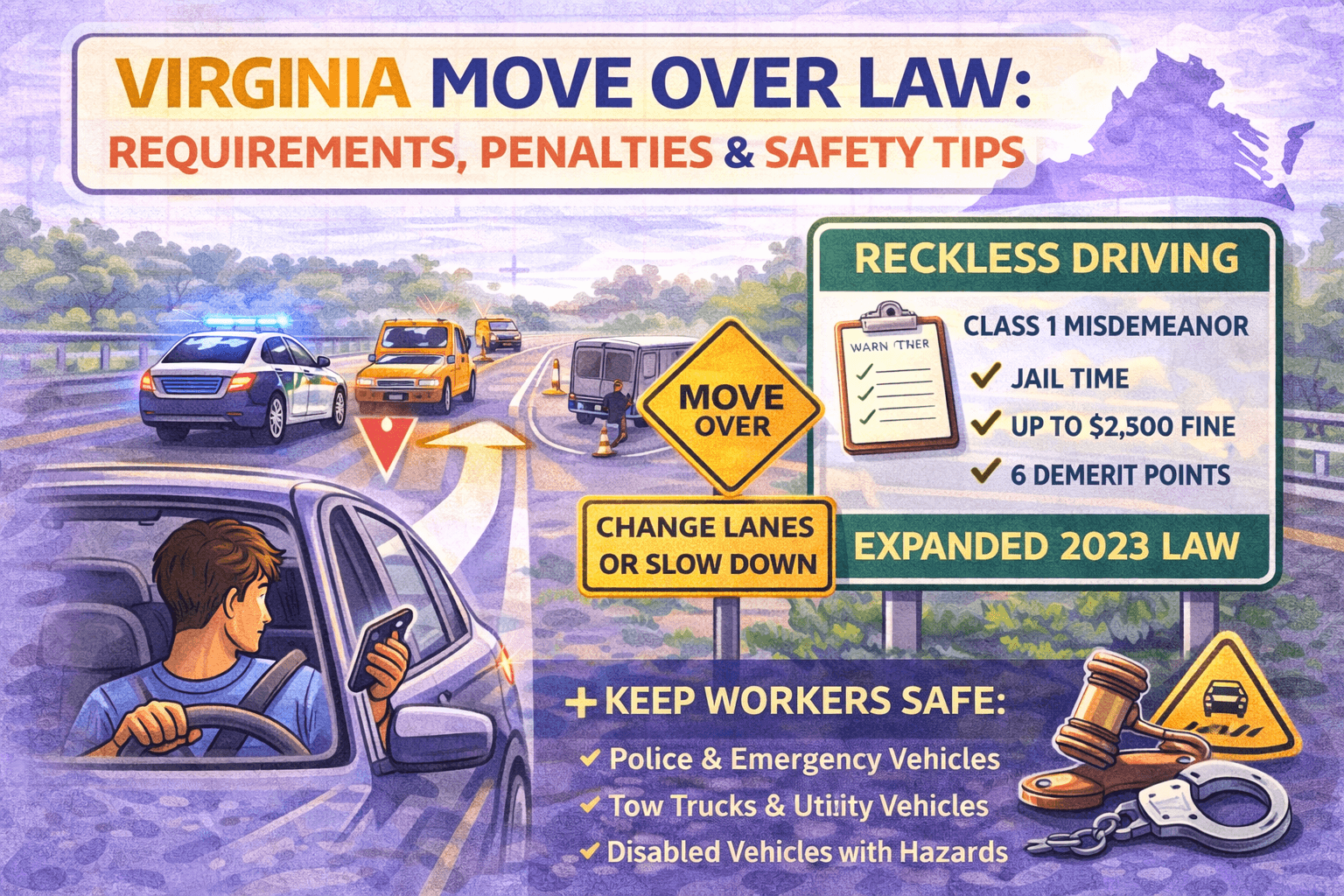
Understanding Virginia's Move Over Law
Virginia's Move Over Law is a critical piece of traffic legislation designed to protect emergency responders, maintenance workers, and other professionals who work along the roadside. This law requires drivers to take specific actions when approaching vehicles with flashing lights—actions that can be the difference between life and death for those working on the side of the road. Whether you're commuting on Interstate 81, traveling through Northern Virginia, or driving rural backroads, understanding and following the Move Over Law is essential for everyone sharing Virginia's roads.
What Is Virginia's Move Over Law?
Virginia's Move Over Law, codified in Virginia Code Section 46.2-921, requires drivers to move away from emergency vehicles and other specified vehicles when those vehicles display flashing, rotating, or oscillating lights on Virginia roadways.
The law was first established to protect emergency responders, but it has been expanded over time to include a broader range of vehicles. In 2023, Virginia significantly expanded the Move Over Law to include all vehicles displaying flashing lights of any color, not just emergency vehicles. This expansion was a major change that all Virginia drivers must understand.
Which Vehicles Are Covered Under the Move Over Law?
The original Move Over Law applied specifically to emergency vehicles, but the 2023 expansion significantly broadened its scope. Today, Virginia drivers must move over or reduce speed when approaching:
Emergency vehicles: Police cars, fire trucks, and ambulances
All vehicles with flashing lights: As of the 2023 expansion, ANY vehicle displaying flashing, rotating, or oscillating lights of any color—including amber, blue, red, or white
Tow trucks and recovery vehicles: Vehicles removing disabled cars from roadways
Department of Transportation (VDOT) vehicles: Maintenance and construction vehicles
Utility company vehicles: Power company crews working on roadside equipment
Law enforcement traffic control vehicles: Police cars directing traffic at accident scenes
This expansion was significant because it now includes many roadside workers and professional vehicles that weren't specifically mentioned in the original law. Any vehicle with flashing lights working along or near the roadside is now protected by Virginia's Move Over Law.
What Exactly Does the Law Require Drivers to Do?
When you approach a vehicle displaying flashing lights:
Move to another lane: If you can safely do so, move your vehicle away from the stopped or slowed vehicle with flashing lights
Increase distance: If you cannot change lanes, slow down and maintain increased distance from the vehicle
Reduce speed: Even if you cannot change lanes, you must reduce your speed to a reasonable level for the conditions
Be prepared to stop: If the vehicle ahead requires it, be ready to come to a complete stop
The key principle is that you must take affirmative action to protect workers or responders at roadside scenes. Simply maintaining your current speed is not sufficient compliance with the law.
Penalties for Violating the Move Over Law
Virginia takes Move Over Law violations very seriously, and the penalties reflect the importance of protecting roadside workers:
Standard violation: Fine of $200 to $500
First offense conviction: Can result in up to six demerit points on your driving record
Reckless driving charge: If your violation is particularly egregious or dangerous, you can be charged with reckless driving, which carries:
Fines up to $2,500
License suspension for up to six months (or longer)
Up to 12 months in jail
If an accident occurs: License suspension is possible, even for a first-time violation
The escalation from a standard traffic violation to reckless driving depends on several factors, including the speed at which you were traveling, whether an accident occurred, and the specific circumstances of the violation.
License Suspension and Move Over Law Violations
One of the most serious consequences of a Move Over Law violation that results in an accident is potential license suspension. Virginia courts have discretion to suspend your driving privileges if your violation caused or contributed to an accident. Even a first-time offense can result in suspension if an accident occurred.
This is why taking the law seriously isn't just about avoiding fines—it's about maintaining your ability to drive in Virginia. A suspended license can impact employment, family obligations, and everyday activities.
Understanding the Distinction: Why the 2023 Expansion Matters
Before 2023, Virginia's Move Over Law applied primarily to emergency vehicles and specifically designated professional vehicles. The 2023 expansion to include all vehicles with flashing lights was a significant change based on growing awareness of roadside worker fatality risks.
According to data from the National Highway Traffic Safety Administration (NHTSA), roadside workers face serious dangers every time they work near traffic. The expanded law recognizes that workers in utility, maintenance, and construction fields face risks comparable to emergency responders.
For drivers, this expansion means you must remain vigilant for any flashing lights on the roadside—not just the traditional emergency vehicle lights you may have grown accustomed to watching for.
Practical Situations Where the Move Over Law Applies
To better understand how the Move Over Law works in real-world situations, consider these examples:
Police traffic stop: You see a police car with lights activated on the shoulder. You must move to another lane if safe, or reduce speed and increase distance.
Fire truck at accident scene: A fire truck with flashing lights is assisting at a multi-car accident. You must move over or slow down.
VDOT maintenance work: A Virginia Department of Transportation vehicle with flashing lights is performing roadside maintenance. You must comply with the Move Over Law.
Tow truck recovering a vehicle: A tow truck with amber flashing lights is removing a disabled vehicle from the roadway. You must move over or reduce speed.
Utility crew repair: An electric company repair vehicle with flashing lights is working on roadside electrical equipment. You must give them space.
In each scenario, your responsibility is the same: recognize the flashing lights, take immediate action to move over or slow down, and maintain safe distance until you've completely passed the scene.
Safety Tips for Compliance
Following the Move Over Law protects both roadside workers and your own safety. Here are practical tips for complying:
Stay alert: Watch for flashing lights in your lanes and on the roadside, especially during night driving or poor visibility
Don't wait until the last second: Begin moving over or slowing down as soon as you see flashing lights ahead
Check your mirrors: Before changing lanes, ensure no vehicles are approaching from behind
Reduce speed gradually: Don't brake suddenly, as this can surprise drivers behind you
Never cross into oncoming traffic: If moving over means crossing into oncoming lanes, maintain your lane and reduce speed instead
Be extra cautious at night: Flashing lights may be harder to see in darkness; use extra caution
Teach young drivers: If you have teenage drivers, model proper Move Over Law compliance and discuss its importance
Don't use your phone: Stay focused on the road and any hazards ahead; avoid distractions
The Human Cost of Not Following the Move Over Law
While the legal penalties are significant, the human cost of Move Over Law violations is even more profound. Roadside workers—law enforcement officers, firefighters, paramedics, utility workers, and maintenance crews—face serious injury or death when drivers fail to move over or reduce speed.
Every year, hundreds of roadside workers are struck by passing vehicles. Many of these incidents are preventable through driver compliance with the Move Over Law. When you pass a scene safely, you're not just following a law—you're potentially saving someone's life.
How Driver Education Supports Safe Driving Practices
Understanding traffic laws like the Move Over Law and developing the habit of following them consistently requires intentional effort. A quality driver improvement course covers these laws in detail and emphasizes the real-world safety implications.
ABC Driving Improvement's Virginia DMV-approved 8-hour online driver improvement course includes comprehensive coverage of Virginia traffic laws, including the Move Over Law and its 2023 expansion. For just $74.99, you'll learn not only what the laws require, but why they exist and how to implement safe driving practices in your daily driving.
Whether you're taking the course to respond to a violation, improve your driving knowledge, or satisfy insurance requirements, the course helps you develop a deeper understanding of safe driving in Virginia.
Conclusion: Protect Those Who Protect and Serve
Virginia's Move Over Law, especially following the 2023 expansion, is clear: when you see flashing lights on any roadside vehicle, move over or slow down. This simple action protects the men and women working on Virginia's roadways and keeps your vehicle safer in the process.
If you're facing a Move Over Law violation, want to refresh your knowledge of Virginia traffic laws, or simply want to become a safer, more informed driver, enroll in ABC Driving Improvement's 8-hour online course today. It's affordable, comprehensive, and approved by the Virginia DMV. Visit abcdrivingcourse.com and take the first step toward safer driving in Virginia.
Dismiss Your Ticket Online
Virginia DMV-approved 8-hour driver improvement clinic. Complete at your own pace from any device.
Start Course — $74.99Why Choose ABC Driving Improvement?
Official Virginia clinic
Complete at your own pace, 24/7
Virginia drivers served
Based on verified reviews
Which Course Code Do You Need?
Check your court paperwork or DMV letter for your assigned code.
Get Your Certificate