Virginia Marijuana DUI Laws: Penalties for Driving High
Get Your CertificateVirginia DUI laws for marijuana, DUID penalties, field sobriety tests, and how to stay legal while driving in Virginia.
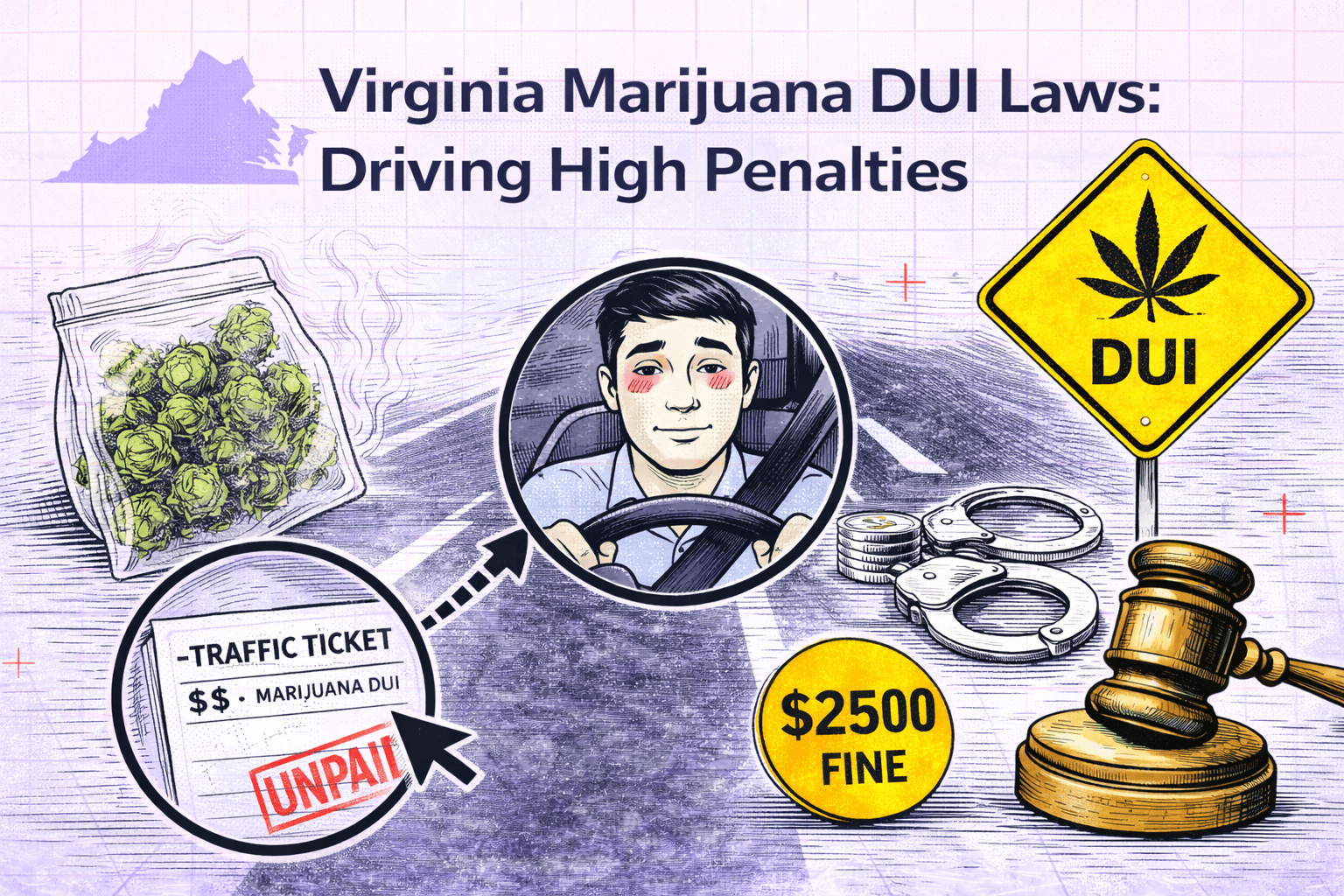
Virginia Marijuana DUI Laws: Everything You Need to Know
As more states have legalized or decriminalized marijuana, confusion about driving under the influence of cannabis has grown. Virginia drivers need to understand a critical fact: just because marijuana is legal in Virginia does not mean you can legally drive after using it. Driving under the influence of marijuana carries the same penalties as alcohol DUI and can result in serious criminal and license consequences. This comprehensive guide explains Virginia's marijuana DUI laws, penalties, and how law enforcement detects impairment.
How Virginia Treats Marijuana-Impaired Driving
In Virginia, marijuana-impaired driving falls under the same DUI statute as alcohol impairment. Virginia Code § 18.2-266 prohibits driving while impaired by any substance, including marijuana. The law makes no distinction between alcohol and drug impairment; the legal consequences are identical.
When Virginia decriminalized simple marijuana possession in 2020, allowing adults to possess up to one ounce for personal use without criminal penalty, many people mistakenly believed this meant they could drive after using marijuana. This is false. Decriminalization of possession does not decriminalize impaired driving.
No Legal THC Limit for Driving
Unlike alcohol, which has a specific legal limit of 0.08 blood alcohol concentration (BAC) for drivers, Virginia has no established legal THC limit for driving. This means there is no safe threshold of THC in your system. If law enforcement can demonstrate that you were impaired by marijuana to any degree, you can be charged with DUI.
This distinction is important: with alcohol, a BAC of 0.07% is technically legal, but any detectable THC level could potentially lead to a DUI charge if impairment is evident. THC affects different people differently, and impairment is determined by behavioral and physical evidence rather than a simple blood test threshold.
How Law Enforcement Detects Marijuana Impairment
Without a legal THC limit, police rely on several methods to detect and prove marijuana impairment:
Drug Recognition Experts (DREs): These specially trained officers receive 16+ hours of training to recognize the signs of drug impairment, including marijuana use. They look for specific physical and behavioral indicators.
Field Sobriety Tests (FSTs): Officers administer physical tests such as the walk-and-turn, one-leg stand, and horizontal gaze nystagmus (HGN) tests to assess balance, coordination, and motor control. While these tests were developed for alcohol impairment, they can also indicate marijuana impairment.
Verbal and Behavioral Indicators: Officers observe things like slow speech, confused thinking, impaired judgment, and memory issues that might indicate marijuana impairment.
Vehicle Operation: How you drive—swerving, erratic speed changes, failing to maintain your lane—can indicate impairment of any kind.
Blood and Urine Tests: If arrested, you'll be asked (or compelled) to provide blood or urine samples that can be tested for THC. However, these tests only show the presence of THC, not necessarily current impairment, since THC can remain in the system for weeks after use.
Saliva Tests: Some law enforcement agencies now use oral swabs to test for recent marijuana use, though these tests are less common than blood tests.
The challenge of proving marijuana impairment (compared to the straightforward nature of a BAC test) is why DREs and field sobriety tests are particularly important in marijuana DUI cases.
DUID: Driving Under the Influence of Drugs
Virginia law includes a specific provision for DUID (Driving Under the Influence of Drugs), codified in Virginia Code § 18.2-266. DUID applies to marijuana and other controlled substances. The elements of a DUID charge are:
The driver operated a motor vehicle
While under the influence of any drug to a degree that impairs driving ability
With impairment demonstrated through observed behaviors, physical tests, or chemical evidence
A DUID conviction carries penalties identical to an alcohol DUI conviction, making marijuana impairment just as serious in the eyes of Virginia law.
Penalties for Marijuana DUI in Virginia
The penalties for a first-offense marijuana DUI in Virginia are severe:
Criminal Classification: Class 1 misdemeanor (the most serious misdemeanor classification)
Jail Time: Up to 12 months imprisonment (judges typically impose 5-10 days for first offenders with no aggravating factors, but longer sentences are possible)
Fines: Up to $2,500
License Suspension: Mandatory 1-year driver's license suspension
Court Costs: Hundreds of dollars in court costs and administrative fees
Criminal Record: A permanent misdemeanor conviction on your criminal record
Insurance Impact: Significant increase in insurance rates or policy cancellation by your insurer
SR-22 Requirement: You'll be required to file an SR-22 certificate with the DMV, proving you have insurance meeting Virginia's minimum requirements
For subsequent offenses within 10 years, penalties increase dramatically, including mandatory jail time of 10 days to one year and fines of $500-$2,500. A third DUI offense within 10 years is classified as a felony, with penalties of 1-5 years imprisonment.
Marijuana Use vs. Legal Driving Status
The critical distinction is this: Legal marijuana use is not the same as legal driving after marijuana use. In Virginia, adults can legally possess up to one ounce of marijuana for personal use. However, this legal possession does not extend to operating a vehicle while impaired by marijuana.
Think of it this way: alcohol is legal to purchase and consume for adults, but driving after drinking is illegal. The same principle applies to marijuana in Virginia. You can possess it legally, but you cannot drive while impaired by it.
How Long Should You Wait After Using Marijuana Before Driving?
This is complicated because marijuana affects different people differently, and there's no reliable way to measure impairment like there is with alcohol. Factors affecting impairment duration include:
Amount consumed
Method of consumption (smoking vs. edibles take effect differently and last different lengths of time)
Individual tolerance and metabolism
Body weight and composition
Stomach contents (for edibles)
Overall health and medications
Generally, impairment from smoking marijuana peaks within 15-30 minutes and diminishes over 2-4 hours. However, edibles can take 1-2 hours to take effect and can last 4-8+ hours. Some people experience residual impairment the next day after heavy use.
The safest approach: Don't drive after using marijuana. If you use marijuana, use alternatives to driving: call a taxi, use a rideshare service, designate a non-using driver, or wait until the next day.
Field Sobriety Tests and Marijuana
If you're suspected of marijuana DUI, officers will typically administer field sobriety tests. It's important to understand your rights:
Right to Refuse: You have the right to refuse field sobriety tests without it being used against you in court (though a refusal may be used as evidence of consciousness of guilt in some cases).
Imperfect Tests: FSTs are designed for alcohol impairment and may not accurately reflect marijuana impairment. Nervousness, medical conditions, age, and weight can affect test performance regardless of impairment status.
Recording: Ensure that any FSTs are recorded (video and audio) so you have evidence of how the tests were conducted.
Legal Representation: Exercise your right to remain silent and request an attorney immediately if arrested for suspected DUI.
Blood Tests and THC Levels
If arrested for suspected marijuana DUI, you'll likely be asked to submit to a blood test to measure THC levels. It's crucial to understand that:
THC Can Persist: THC metabolites can remain in blood for days or weeks after use, long after impairment has ceased. A positive blood test doesn't necessarily mean you were impaired at the time of driving.
No Safe Threshold: Unlike alcohol's 0.08 BAC limit, there's no established safe THC level. Even low levels can theoretically be used against you.
Right to Refuse: Virginia's "implied consent" law makes it difficult to refuse a blood test without additional consequences, but you do have rights. Consult with an attorney about your options.
Passive Exposure: In extreme cases, secondhand marijuana smoke exposure might result in trace THC in your blood, though sufficient to support a DUI charge is unlikely.
The Importance of Defensive Driving
The safest approach to marijuana and driving is simple: don't do it. Plan ahead if you're going to use marijuana. Arrange transportation, wait until you're home, or designate a sober driver.
For all drivers—regardless of marijuana or alcohol use—defensive driving skills are essential. Being alert, following traffic laws, maintaining safe speeds, and anticipating hazards can prevent accidents and keep you safe on Virginia roads.
ABC Driving Improvement's 8-hour Virginia DMV-approved driver improvement course covers defensive driving techniques, Virginia traffic laws, and safe driving practices. The course costs just $74.99 and is completed entirely online at your own pace. Taking this course can help you become a safer driver overall.
Recovery and Moving Forward After a Marijuana DUI
If you've been convicted of marijuana DUI in Virginia, recovery is possible, but it requires commitment:
Complete Court Requirements: Fulfill all sentencing requirements including jail time, fines, probation, and counseling.
Maintain Insurance: Ensure continuous insurance coverage and comply with SR-22 filing requirements.
Demonstrate Responsibility: Show the DMV, your insurance company, and the court that you're committed to safe, sober driving going forward.
Consider Driver Education: Taking a driver improvement course demonstrates your commitment to safer driving and can help reduce insurance costs.
Seek Support: If substance use is an issue, seek professional help through counseling or support groups.
ABC Driving Improvement's course can help demonstrate your commitment to responsible driving after a conviction. Many courts recognize driver improvement courses as evidence of rehabilitation and commitment to future compliance.
Conclusion
Virginia's marijuana DUI laws are clear and unforgiving: driving under the influence of marijuana is illegal and carries the same serious penalties as alcohol DUI. Even though adults can legally possess small amounts of marijuana in Virginia, driving after use is prohibited.
The best approach is prevention. If you choose to use marijuana, do so responsibly by ensuring you don't drive. Use alternative transportation, wait until impairment has completely passed (which can take many hours, especially with edibles), and prioritize safety for yourself and others on Virginia roads.
If you've received a DUI citation or want to improve your defensive driving skills, enroll in ABC Driving Improvement's 8-hour Virginia DMV-approved online course today for $74.99. Our comprehensive course covers Virginia DUI laws, defensive driving techniques, and safe driving practices to help you make better decisions on the road.
Dismiss Your Ticket Online
Virginia DMV-approved 8-hour driver improvement clinic. Complete at your own pace from any device.
Start Course — $74.99Why Choose ABC Driving Improvement?
Official Virginia clinic
Complete at your own pace, 24/7
Virginia drivers served
Based on verified reviews
Which Course Code Do You Need?
Check your court paperwork or DMV letter for your assigned code.
Get Your Certificate