Virginia HOV Lane Rules: Violations, Fines & Exemptions
Get Your CertificateComplete guide to Virginia's HOV lane requirements, occupancy rules, fines for violations, and exemptions on I-66, I-95, and I-64.
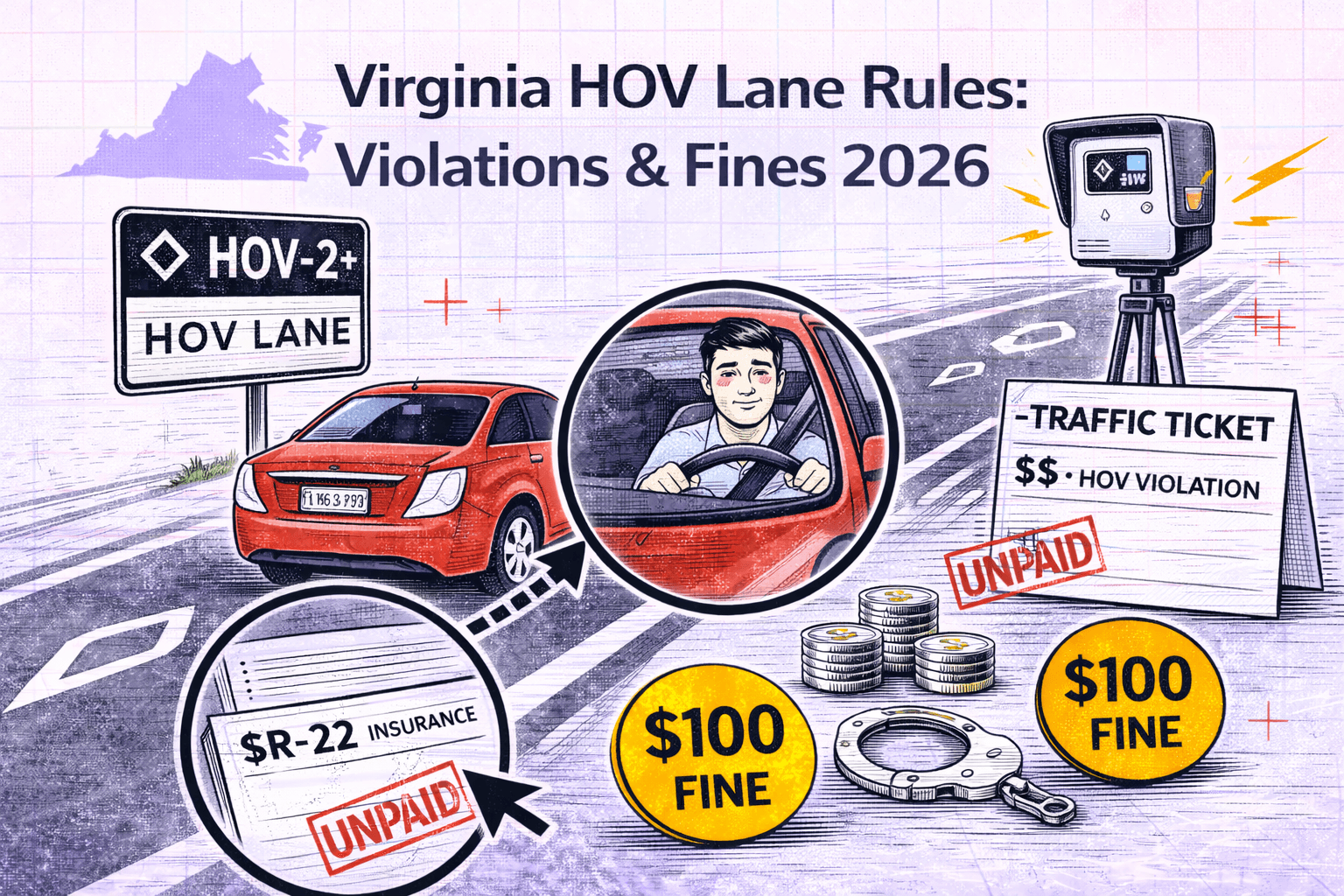
What Are HOV Lanes and Why Virginia Has Them
High-Occupancy Vehicle (HOV) lanes, also known as carpool lanes or diamond lanes, are special highway lanes reserved for vehicles carrying a minimum number of occupants. Virginia's HOV lane system is one of the most extensive in the United States, designed to reduce traffic congestion, promote carpooling, and encourage more efficient use of highway infrastructure during peak travel times.
These lanes operate during specific hours and require vehicles to meet occupancy requirements—typically carrying 2, 3, or more people depending on the location. Violating HOV lane rules can result in significant fines and citations that affect your driving record.
Where Virginia's HOV Lanes Are Located
Interstate 66 (Northern Virginia)
I-66 contains some of Virginia's most heavily used HOV lanes, particularly in the Fairfax County area near Washington D.C. The I-66 HOV lanes run in both directions during peak hours:
Eastbound: 6:00 AM to 10:00 AM
Westbound: 3:00 PM to 8:00 PM
The occupancy requirement for I-66 HOV lanes is HOV-3, meaning you need at least 3 people in the vehicle (driver plus 2 additional occupants).
Interstate 95/395 (Northern Virginia)
The I-95/395 corridor near Washington D.C. features HOV lanes that are critical for managing rush-hour traffic. Operating times include:
Northbound: 6:00 AM to 10:00 AM
Southbound: 3:00 PM to 8:00 PM
I-95/395 HOV lanes require HOV-2 occupancy, meaning 2 or more people in the vehicle.
Interstate 64 (Hampton Roads Area)
The I-64 corridor in the Hampton Roads region operates HOV lanes to manage traffic during peak periods. These lanes also require HOV-2 occupancy and operate during
Eastbound: 6:30 AM to 9:30 AM
Westbound: 4:00 PM to 7:00 PM
Understanding HOV Occupancy Requirements
HOV-2: Two or More Occupants
HOV-2 lanes require a minimum of 2 people in the vehicle. This includes the driver plus at least one additional passenger. The additional person must be physically present in the vehicle; a child in a car seat counts as one occupant. Certain vehicles with exemptions (discussed below) may use HOV-2 lanes even with a single occupant during designated hours.
HOV-3: Three or More Occupants
HOV-3 lanes require a minimum of 3 people in the vehicle. This means the driver plus at least 2 additional passengers must be present. HOV-3 requirements are stricter and typically apply during the highest traffic volume periods. Some I-66 lanes may switch between HOV-2 and HOV-3 depending on traffic conditions.
Counting Occupants Correctly
When counting vehicle occupants for HOV compliance, remember:
Children in car seats count as occupants
Infants count as occupants
Mannequins, dolls, or inflatable passengers do NOT count (and using them can result in additional fines)
Pets do NOT count as occupants
The driver counts as one occupant
Misrepresenting occupancy counts is a serious violation and will result in substantial fines.
Who Is Exempt From HOV Requirements
Electric and Clean Fuel Vehicles
Certain environmentally friendly vehicles can use HOV lanes with fewer than the required occupants, even with a single driver. To qualify, your vehicle must have a valid Clean Air Vehicle (CAV) license plate or decal issued by Virginia. Eligible vehicles include:
Battery electric vehicles
Plug-in hybrid electric vehicles (PHEVs)
Fuel cell vehicles (hydrogen)
Hybrid electric vehicles meeting specific efficiency standards
You must display your CAV decal clearly on your vehicle for enforcement officers to see it. Without proper identification, you may be cited regardless of your vehicle type.
Motorcycles
Motorcycles are automatically exempt from HOV occupancy requirements and can use HOV lanes at any time, with or without passengers. This exemption recognizes that motorcycles reduce overall traffic congestion even when ridden solo.
Buses and Transit Vehicles
Public buses and authorized transit vehicles are exempt from HOV requirements. These vehicles can use HOV lanes during peak hours regardless of passenger count, as they serve a public transportation purpose.
Emergency Vehicles
Police vehicles, fire trucks, ambulances, and other official emergency vehicles can use HOV lanes regardless of occupancy when operating with emergency lights and sirens activated.
E-ZPass Express Lanes vs. HOV Lanes: Understanding the Difference
Virginia's newer E-ZPass Express Lanes, particularly on I-66 and I-495, operate under a different system than traditional HOV lanes. It's important to understand the distinction:
E-ZPass Express Lanes
Require an E-ZPass transponder to use
Have dynamic tolls that change based on traffic demand
Offer a "carpool discount" for HOV vehicles (usually 50% of the toll)
General purpose lanes run alongside the express lanes
Anyone with an E-ZPass can use them by paying the toll
Traditional HOV Lanes
No transponder needed (though some have enforcement cameras)
Free to use if you meet occupancy requirements
Dedicated lanes for HOV traffic only
No toll payment option for general traffic
Strictly enforced occupancy rules
Some Virginia highways feature both types, so be sure you understand which system applies to the corridor you're traveling on.
Penalties for HOV Lane Violations
First Offense
Your first HOV lane violation in Virginia can result in:
Fine: $125 (minimum)
Demerit points: 3 points added to your driving record
Court costs: Additional fees may apply depending on jurisdiction
Repeat Offenses
If you accumulate multiple HOV violations within a certain period, penalties increase significantly:
Second offense: Up to $250 fine and possible court appearance
Third or subsequent offense: Up to $1,000 fine, potential jail time (up to 60 days), and more serious driving record consequences
The specific penalties can vary based on your jurisdiction and whether the violation was caught by a highway patrol officer or automated enforcement camera.
How Violations Affect Your Driving Record
Each HOV violation adds demerit points to your Virginia driving record. These points:
Stay on your record for several years
Can increase your auto insurance rates
Accumulate toward license suspension (12 points in 12 months, 18 in 24 months, 24 in 36 months)
May result in required defensive driving courses
Multiple violations can quickly escalate to serious driving record consequences.
Automated Enforcement and HOV Violations
Many Virginia HOV lanes use automated camera enforcement systems that photograph vehicles using the lanes in violation of occupancy requirements. If you're caught by a camera system:
The vehicle owner (not necessarily the driver) receives a citation by mail
The citation is typically a civil violation rather than criminal
You can request an administrative hearing to contest the violation
You may provide photographic or video evidence to challenge the citation
If you receive an automated HOV citation, review it carefully and consider your options before paying or contesting it.
Common HOV Lane Mistakes Drivers Make
Miscounting Passengers
The most common mistake is believing you have enough passengers when you don't. Remember that occupants must be actual people—children and babies count, but pets do not. If you're unsure, don't use the HOV lane.
Forgetting Peak Hour Restrictions
HOV lanes operate only during specific hours. Using them outside designated peak hours is also a violation. Set a reminder on your phone if you frequently travel during transition times between peak and off-peak hours.
Misunderstanding Clean Air Vehicle Eligibility
Not all hybrid vehicles qualify for HOV exemptions. You must have a valid CAV decal and meet Virginia's specific efficiency standards. Displaying a decal on an ineligible vehicle is fraud and can result in serious penalties.
Relying on Passenger Promises
Some drivers use HOV lanes based on a passenger's promise to stay in the vehicle until they reach their destination. This creates risk—if the passenger is dropped off before your exit, you're momentarily in violation. Only enter HOV lanes when you're certain you'll maintain occupancy requirements throughout your travel in that lane.
Ignoring HOV Transition Periods
The transition into and out of HOV peak hours can be confusing. These lanes activate and deactivate at specific times, and you need to know the exact times for your route and direction of travel.
How to Ensure HOV Compliance
Know your route: Research HOV lane locations, hours, and occupancy requirements before you travel
Double-check passenger count: Before entering a HOV lane, confirm you have the required number of occupants
Use technology: Google Maps and other navigation apps can alert you to HOV lane requirements
Check your CAV decal: If you have an eligible vehicle, ensure your CAV plate or decal is valid and clearly visible
Plan alternative routes: If you don't have enough occupants, use general purpose lanes
Stay informed: Virginia DMV updates HOV lane rules periodically; check for changes annually
Impact of HOV Violations on Insurance and Driving Record
An HOV violation is treated as a moving violation and will appear on your driving record. This can impact you in several ways:
Insurance rates: Many insurers increase premiums after moving violations
License suspension: Multiple violations accumulate points toward suspension
Employment: Drivers with commercial driving requirements may face job consequences
Future hiring: Background checks may reveal violations
Contesting an HOV Citation
If you believe you received an HOV citation in error, you have options:
Request a hearing: You can request an administrative hearing to challenge the citation
Gather evidence: Collect photos, video, or witness statements supporting your compliance
Attend court: Present your case before a judge or hearing officer
Consider legal assistance: For significant violations, consulting a traffic attorney may be worthwhile
Maintain a Safe Driving Record
HOV violations are preventable with attention and compliance. However, if you've already accumulated driving violations or are concerned about your record, taking a defensive driving course demonstrates your commitment to traffic safety. ABC Driving Improvement's Virginia DMV-approved course is designed to help drivers like you improve their knowledge of traffic laws and safe driving practices.
Our 8-hour, 100% online program costs just $74.99 and covers important topics including highway safety, occupancy laws, and defensive driving techniques. Completing the course can help reduce points on your record and show the DMV and courts that you're taking responsibility for your driving.
Whether you're trying to recover from a violation or simply want to ensure you understand Virginia's complex traffic laws, enroll in ABC Driving Improvement today and take control of your driving record.
Dismiss Your Ticket Online
Virginia DMV-approved 8-hour driver improvement clinic. Complete at your own pace from any device.
Start Course — $74.99Why Choose ABC Driving Improvement?
Official Virginia clinic
Complete at your own pace, 24/7
Virginia drivers served
Based on verified reviews
Which Course Code Do You Need?
Check your court paperwork or DMV letter for your assigned code.
Get Your Certificate