Virginia DUI Laws and Penalties You Need to Know
Get Your CertificateUnderstand Virginia DUI laws, penalties for first and repeat offenses, license suspension rules, and steps to protect your driving record.
What Virginia Law Says About Driving Under the Influence
A DUI charge in Virginia is not something to take lightly. Virginia has some of the strictest DUI laws in the country, and the consequences of a conviction can follow you for years. Whether you were recently charged or you simply want to understand the rules of the road, this guide covers everything you need to know about Virginia's DUI laws, the penalties you may face, and what you can do to move forward.
How Virginia Defines DUI
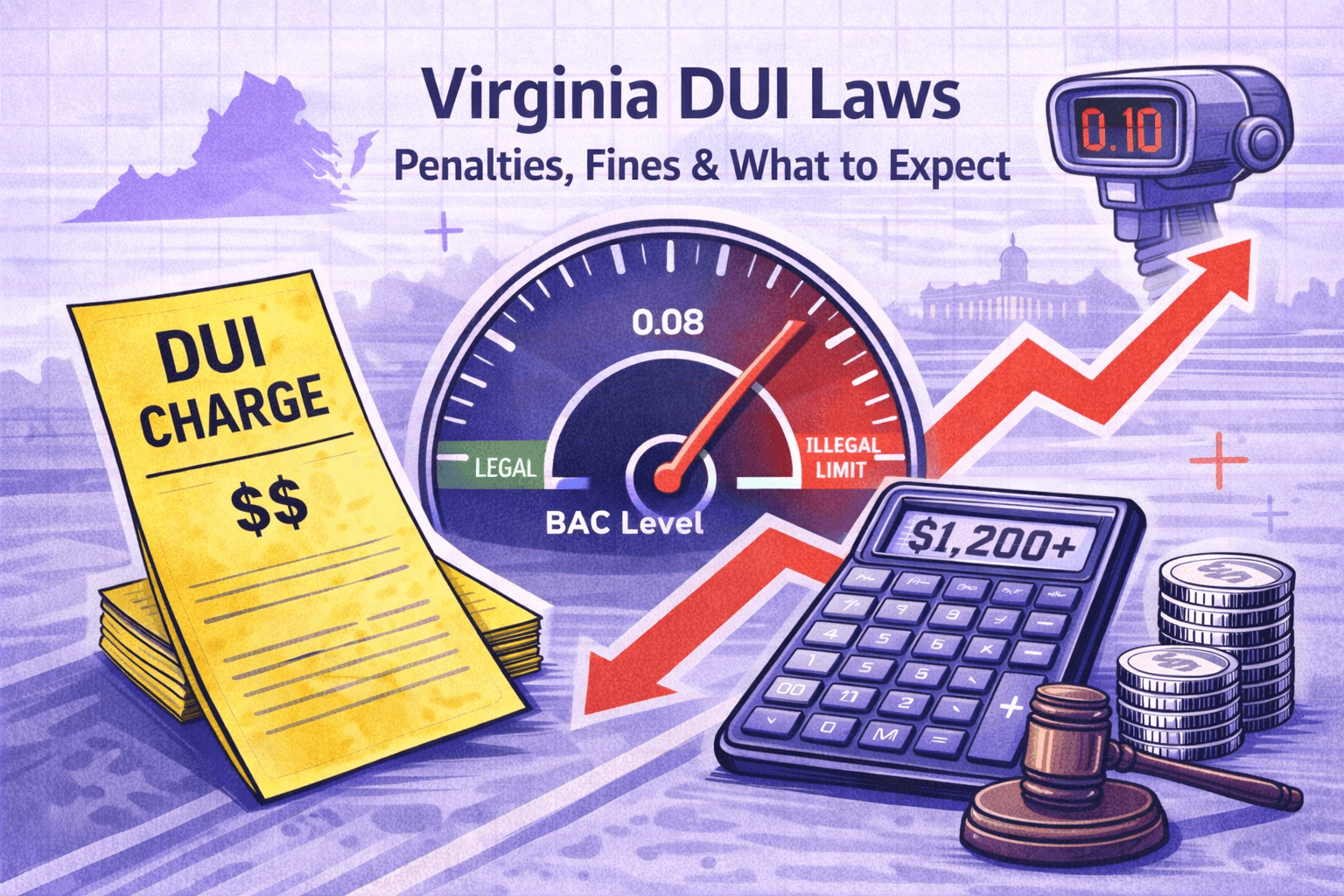
Under Virginia Code Section 18.2-266, it is illegal to drive or operate a motor vehicle while under the influence of alcohol, drugs, or a combination of both. Virginia uses the standard blood alcohol concentration (BAC) threshold of 0.08% for drivers aged 21 and older. For commercial drivers, the limit drops to 0.04%. For drivers under 21, Virginia enforces a zero-tolerance policy with a BAC limit of 0.02%.
It's worth noting that you can be charged with DUI in Virginia even if your BAC is below 0.08%. If an officer determines that your ability to drive is impaired by alcohol or drugs — including prescription medications — you can still face charges regardless of what the breathalyzer reads.
Virginia DUI Penalties by Offense
The penalties for a DUI conviction in Virginia escalate significantly with each offense. Here's what you need to understand about the consequences at each level.
First Offense DUI in Virginia
A first-offense DUI in Virginia is a Class 1 misdemeanor. While it may be your first encounter with the law, the consequences are still serious.
Fine. A minimum fine of $250, with the potential for much higher amounts depending on the circumstances of your case.
License suspension. Your driver's license will be suspended for 12 months. You may be eligible for a restricted license that allows you to drive to work, school, or other approved activities, but only after meeting specific conditions.
Jail time. While jail time is not mandatory for a standard first offense, it becomes mandatory if your BAC was 0.15% or higher. A BAC between 0.15% and 0.20% carries a mandatory minimum of 5 days in jail. A BAC above 0.20% carries a mandatory minimum of 10 days.
Ignition interlock. First-time offenders may be required to install an ignition interlock device on their vehicle as a condition of obtaining a restricted license.
VASAP enrollment. You will be required to enroll in the Virginia Alcohol Safety Action Program (VASAP), which includes an assessment and completion of an approved education or treatment program.
Second Offense DUI in Virginia
A second DUI conviction within 10 years carries significantly harsher penalties.
Fine. A minimum fine of $500.
License suspension. Your license will be suspended for 3 years. You may apply for a restricted license after a certain period, depending on how much time has passed since your first offense.
Jail time. A mandatory minimum of 10 days in jail. If the second offense occurs within 5 years of the first, the mandatory minimum increases to 20 days. If your BAC was 0.15% or higher, additional mandatory jail time applies.
Ignition interlock. An ignition interlock device is required for at least 6 months as a condition of any restricted driving privileges.
Vehicle forfeiture. The court may order the forfeiture of your vehicle for a second offense.
Third and Subsequent Offenses
A third DUI offense within 10 years is a Class 6 felony in Virginia — a significant escalation from misdemeanor charges.
Fine. A minimum fine of $1,000.
License revocation. Your license will be revoked indefinitely. You may petition for restoration after a minimum waiting period, but reinstatement is not guaranteed.
Jail time. A mandatory minimum of 90 days in jail if the third offense occurs within 10 years. If it occurs within 5 years, the mandatory minimum increases to 6 months.
Permanent criminal record. A felony DUI conviction creates a permanent criminal record that affects employment, housing, and many other aspects of life.
How a DUI Affects Your Driving Record and Insurance
Beyond the courtroom, a DUI conviction in Virginia creates lasting consequences for your driving record and your wallet.
Demerit points. A DUI conviction adds 6 demerit points to your Virginia driving record. These points remain active for 11 years — longer than almost any other traffic offense.
Insurance rates. Your auto insurance rates will almost certainly increase after a DUI conviction. Many drivers see their premiums double or even triple. Some insurance companies may drop your coverage altogether, forcing you to obtain an SR-22 certificate and find a new provider willing to insure high-risk drivers.
Employment impact. Many employers conduct background checks and driving record reviews. A DUI conviction — especially a felony DUI — can limit your career options, particularly in fields that require driving or security clearances.
Virginia's Implied Consent Law
Under Virginia's implied consent law (VA Code 18.2-268.2), any person who operates a motor vehicle on Virginia roads is deemed to have consented to a breath or blood test if lawfully arrested for DUI. Refusing to submit to testing carries its own set of consequences.
First refusal. A first-time refusal results in a 12-month license suspension with no option for a restricted license for the first 12 months. This is a civil penalty separate from and in addition to any DUI penalties.
Second or subsequent refusal. A second refusal within 10 years is a Class 2 misdemeanor carrying additional fines, jail time, and a 3-year license suspension.
The key point is that refusing a breathalyzer does not help your case in Virginia. You face penalties for the refusal on top of any penalties for the DUI charge itself.What to Do After a DUI Charge in Virginia
If you've been charged with a DUI in Virginia, the steps you take in the weeks and months ahead can significantly affect the outcome of your case.
Understand your court date and charges. Review the paperwork you received at the time of your arrest. Know when and where your court appearance is scheduled, and understand exactly what charges you're facing.
Consider hiring an attorney. DUI cases in Virginia involve complex legal procedures, including the validity of traffic stops, breathalyzer calibration, and field sobriety test administration. An experienced DUI attorney can evaluate the strength of the evidence and identify potential defenses.
Enroll in VASAP early. If you know you'll be required to complete the Virginia Alcohol Safety Action Program, enrolling early demonstrates responsibility to the court.
Complete a driver improvement course. Taking a Virginia DMV-approved driver improvement course before your court date shows the judge that you're committed to becoming a safer driver. While it won't dismiss a DUI charge, it can work in your favor during sentencing and may help with restricted license applications.
Request a restricted license. If your license is suspended, you can petition the court for a restricted license that allows you to drive to work, school, medical appointments, and other essential activities. Having an ignition interlock device installed and completing required programs are typically conditions for receiving a restricted license.
Can a Driver Improvement Course Help After a DUI?
While a driver improvement course cannot erase a DUI charge, it can provide meaningful benefits during and after the legal process.
Court preparation. Completing a DMV-approved 8-hour driver improvement course before your court date shows initiative and a willingness to change. Judges and attorneys view this favorably, and it can support requests for leniency during sentencing.
Safe driving points. Eligible Virginia drivers can earn up to 5 safe driving points by completing an approved driver improvement course. These positive points help offset the 6 demerit points added by a DUI conviction and improve your overall point balance with the DMV.
Insurance benefits. Many insurance providers offer discounts to drivers who voluntarily complete a driver improvement course. Given the substantial insurance increases that follow a DUI conviction, every bit of savings helps.
Personal growth. A quality driver improvement course reinforces defensive driving techniques and responsible decision-making. The skills you learn can help you avoid future violations and make better choices behind the wheel.
Frequently Asked Questions
Is a DUI a felony in Virginia?
A first or second DUI offense in Virginia is typically a Class 1 misdemeanor. However, a third DUI within 10 years is a Class 6 felony. A DUI that results in serious injury or death can also be charged as a felony regardless of how many prior offenses you have.
How long does a DUI stay on your record in Virginia?
A DUI conviction stays on your Virginia driving record for 11 years. On your criminal record, a DUI conviction is permanent and does not automatically expunge. The 6 demerit points associated with a DUI also remain on your driving record for the full 11-year period.
Can you get a restricted license after a DUI in Virginia?
Yes, in most cases. After a DUI conviction and license suspension, you can petition the court for a restricted license. Conditions typically include installing an ignition interlock device, enrolling in VASAP, and limiting your driving to approved purposes such as commuting to work, school, or medical appointments.
What is the BAC limit in Virginia?
The legal BAC limit in Virginia is 0.08% for drivers 21 and older, 0.04% for commercial drivers, and 0.02% for drivers under 21. However, you can be charged with DUI at any BAC level if an officer determines your driving is impaired.
Does refusing a breathalyzer help in Virginia?
No. Virginia's implied consent law means that refusing a breathalyzer results in automatic penalties including license suspension — on top of any DUI charges. A first refusal carries a 12-month license suspension with no restricted license option. A second refusal is a criminal misdemeanor.
Take a Step Toward Better Driving
If you're dealing with a DUI charge in Virginia or simply want to invest in safer driving habits, a Virginia DMV-approved driver improvement course is a practical step in the right direction. It can help you earn safe driving points, prepare for court, and potentially reduce insurance costs.
ABC Driving Improvement offers a fully online, self-paced 8-hour course you can complete from any device. Work through it on your own schedule, and receive your certificate of completion as soon as you finish.
Visit abcdrivingcourse.com to get started today.
Dismiss Your Ticket Online
Virginia DMV-approved 8-hour driver improvement clinic. Complete at your own pace from any device.
Start Course — $74.99Why Choose ABC Driving Improvement?
Official Virginia clinic
Complete at your own pace, 24/7
Virginia drivers served
Based on verified reviews
Which Course Code Do You Need?
Check your court paperwork or DMV letter for your assigned code.
Get Your Certificate