How to File a Car Accident Report in Virginia: Step-by-Step Guide
Get Your CertificateFile a Virginia car accident report with the FR-300P form. Step-by-step guide with deadlines and tips to protect your record.
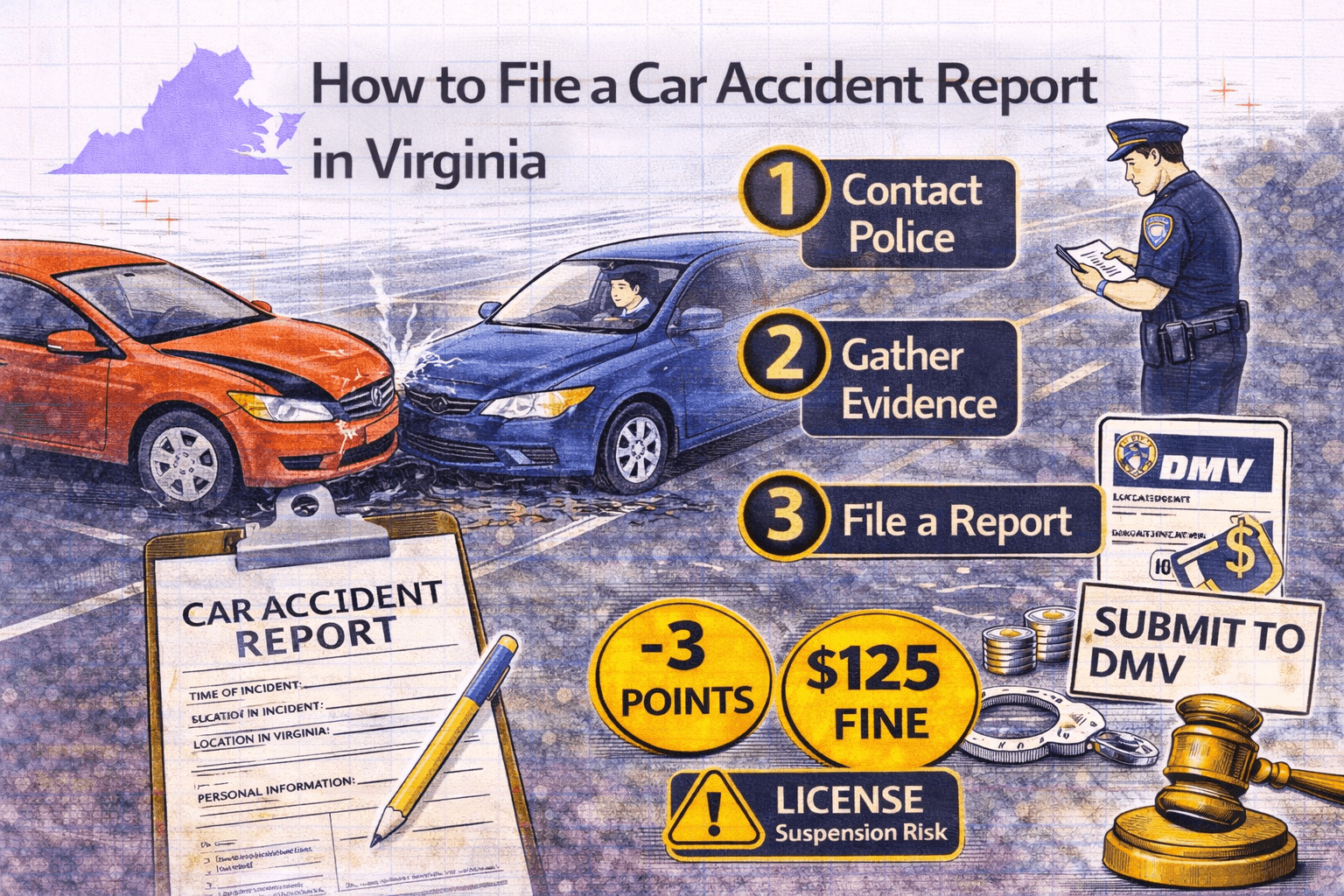
If you've just been in a car accident, we know you're stressed. The car's damaged, your nerves are shot, and now you're wondering what to do next. Filing an accident report might seem complicated, but it's a straightforward process in Virginia—and it's important for protecting your driving record, insurance claim, and legal rights.
In this guide, we'll walk you through exactly what you need to do, step by step.
Do You Need to File an Accident Report in Virginia?
First, the key question: does your accident require a report?
In Virginia, you must file an official accident report if the accident involves:
Property damage over $1,000: This is the magic number. If damage to all vehicles and property involved is under $1,000, you may not need to file, but it's often wise to anyway.
Injury or death: Any accident with injuries requires immediate police involvement and an accident report.
Hit and run: If the other driver left the scene, you absolutely need to file a report.
Hazardous materials: If hazardous materials were involved, a report is mandatory.
Impaired driving: If you suspect the other driver was impaired, report it.
Even if you're below the $1,000 threshold, consider filing anyway. It creates an official record that protects you if the other driver later claims injuries or additional damage.
Virginia's Accident Report Form: The FR-300P
Virginia uses a specific form called the FR-300P (Accident Report Form) for crash reports. If a police officer responds to your accident, they'll complete this form. If police don't respond (often the case in minor accidents), you'll need to file it yourself.
You can obtain the FR-300P by:
Visiting the Virginia Department of Motor Vehicles website
Picking one up at any local DMV office
Requesting it from the police department that handles accidents in your area
Asking your insurance company (many have the form on file)
The form requests:
Driver information (license number, address, insurance details)
Vehicle information (make, model, VIN, license plate)
Accident details (date, time, location)
Description of how the accident occurred
Injury or damage details
Insurance information for all parties involved
Timeline and Deadlines: When to File
This is critical, so mark it on your calendar:
If police responded to the accident: The officer files the report, and the official accident report will be completed within 10 business days. You don't need to file anything yourself in this case—the officer's report becomes the official record.
If police did not respond: You have 10 days from the date of the accident to file the FR-300P form yourself. This is a firm deadline in Virginia. Missing it can result in penalties, including license suspension if the accident involved injuries or significant damage.
When injuries are involved: Report immediately, even if you don't think the injuries are serious. What seems minor might develop into something more, and having an official report protects everyone involved.
The 10-day deadline is strict—we recommend filing within the first three days while details are fresh in your mind and evidence is easier to gather.
What Information You'll Need When Filing
Before sitting down to fill out the FR-300P, gather these details:
For your vehicle and situation:
Your driver's license number and state
Your vehicle's VIN, license plate, and registration
The exact date, time, and location of the accident
A clear description of what happened
Photos of the damage (take these at the scene if possible)
Estimated cost of damages (you'll refine this later with insurance quotes)
For the other driver(s):
Full name, address, and phone number
Driver's license number and state
Vehicle VIN, license plate, and year/make/model
Insurance company name and policy number
Witness contact information if available
For the accident itself:
Road conditions (dry, wet, icy)
Traffic control devices present (traffic lights, stop signs)
Speed of vehicles involved
Point of impact on each vehicle
Whether airbags deployed
Whether emergency services were called
If you don't have all this information, include what you do have and note that you couldn't obtain the rest. Don't fabricate details—incomplete but honest is much better than complete but inaccurate.
Steps to File Your Virginia Accident Report
Step 1: Gather Your Information
Collect all the details listed above. If you didn't exchange information with the other driver at the scene, you may need to contact them (be cordial), request information from your insurance company, or check if a police report was filed.
Step 2: Obtain the FR-300P Form
Download it from the Virginia DMV website or pick one up in person. You can file electronically or by mail.
Step 3: Fill Out the Form Accurately
Be thorough but honest. If you're unsure about something, don't guess. Answer what you know clearly and leave unclear items blank or note "unknown." Inaccurate information can cause complications with your insurance claim and potentially expose you to liability issues.
Step 4: Include Supporting Documents
Attach copies (not originals) of:
Photos of vehicle damage
Photos of the accident scene
Witness statements (if any)
Medical reports (if injuries were involved)
Police report number (if one was filed)
Step 5: Submit to the Virginia DMV
You can file through:
The Virginia DMV website (for electronic submission)
Mail to the address on the form
In person at your local DMV office
Keep a copy for your records.
How Accidents Affect Your Driving Record and Insurance
Here's what happens after you file:
Your Driving Record: The accident is recorded on your Virginia driving record. If you were found at fault, it typically stays on your record for three to five years. If you were not at fault, it still appears but doesn't carry demerit points or as much weight.
Insurance Premium Impact: At-fault accidents usually increase your insurance premiums by 15-30%, depending on your insurer and history. This increase typically lasts three to five years.
Demerit Points: If the accident involved a traffic violation (like running a red light), you may receive demerit points. Multiple violations can lead to license suspension.
How a Driver Improvement Course Can Help After an Accident
This is something many drivers don't realize: taking a driver improvement course after an accident can actually help reduce the impact on your record.
Here's how:
Insurance Discounts: Many insurance companies offer discounts (up to 10%) to drivers who complete an approved driver improvement course. This discount can offset some of the premium increase from the accident.
Court Consideration: If your accident involved a traffic violation and a court case, completing a court-approved driver improvement course shows the judge you're taking responsibility and committed to safer driving. This can result in reduced penalties.
Preventive Action: An 8-hour online defensive driving course teaches you the skills and awareness needed to avoid future accidents. Many drivers find the course genuinely improves their confidence and safety on the road.
Our 8-hour online course is Virginia-approved, easy to complete from home, and costs just $74.99. Many drivers complete it within a week of their accident, providing proof to their insurance company before the renewal period.
FAQ: Car Accident Reports in Virginia
What happens if I don't file an accident report within 10 days?
Consequences can be serious. You may face license suspension, particularly if the accident involved injuries or property damage over $1,000. The other party could also file, and your failure to report might raise red flags with your insurer. Always file within the 10-day window.
Can I file an accident report if the other driver was uninsured?
Yes, absolutely. File the report as normal. In fact, this is even more important because you'll need to use your own uninsured motorist coverage. Document everything carefully—what the uninsured driver looked like, their vehicle description, any witnesses. Let your insurance company know immediately.
Will filing an accident report automatically increase my insurance rates?
Not automatically—it depends on fault. If you're found at fault, expect an increase. If you're not at fault (the other driver caused the accident), most insurers won't increase your rates, and you may be able to claim damages through the at-fault driver's insurance. Either way, filing the report is essential for your claim to be valid.
How long does an accident stay on my Virginia driving record?
An accident stays on your record for three to five years, though the impact on insurance usually decreases after the first two years. Taking a driver improvement course can help offset some of that impact through insurance discounts.
Protect Your Driving Record Starting Today
A car accident is stressful, but the steps afterward are straightforward. File your FR-300P form within 10 days, work with your insurance company, and consider taking proactive steps to protect your record.
The best thing you can do? Don't wait. Complete an approved driver improvement course as soon as possible after an accident. It's $74.99, takes 8 hours, and can qualify you for insurance discounts while demonstrating your commitment to safer driving.
Visit our driver resources page to understand your options, or enroll in our 8-hour course today. We're here to help you navigate this, and we'll make it quick and easy.
You've got this. Let's get your driving record back on track.
Dismiss Your Ticket Online
Virginia DMV-approved 8-hour driver improvement clinic. Complete at your own pace from any device.
Start Course — $74.99Why Choose ABC Driving Improvement?
Official Virginia clinic
Complete at your own pace, 24/7
Virginia drivers served
Based on verified reviews
Virginia law requires you to file an accident report if the crash involves injury, death, or property damage over $1,500. You can file through the Virginia DMV using form FR300P within 10 days of the accident. Failing to report can result in license suspension, so don't skip this step — even if the other driver says they'll handle it.
Which Course Code Do You Need?
Check your court paperwork or DMV letter for your assigned code.
Get Your Certificate