Aggressive Driving & Road Rage Laws in Virginia: Complete 2026 Guide
Get Your CertificateUnderstand Virginia's aggressive driving laws, how they differ from reckless driving, penalties, road rage escalation, and prevention strategies.
Understanding Aggressive Driving and Road Rage in Virginia
Aggressive driving and road rage represent some of the most dangerous behaviors on Virginia's roadways. These violations don't just break traffic laws—they endanger lives, escalate conflicts, and can result in serious legal consequences. Whether you're a frequent commuter or an occasional driver, understanding how Virginia defines and penalizes aggressive driving is essential for staying safe and legally compliant. This guide breaks down everything you need to know about aggressive driving charges in Virginia and how to avoid them.
What Is Aggressive Driving Under Virginia Law?
Virginia Code Section 46.2-862 defines aggressive driving as the operation of a motor vehicle with the specific intent to annoy, harass, obstruct, or intimidate another driver. This is distinct from simply driving badly or being impatient; aggressive driving requires an intentional element.
Aggressive driving in Virginia includes behaviors such as:
Tailgating: Following another vehicle too closely, especially with intent to intimidate or force the other driver to move
Intentional blocking: Deliberately preventing another vehicle from passing or changing lanes
Cutting off: Rapidly pulling in front of another vehicle with insufficient clearance
Flashing lights: Rapidly flashing high-beam headlights at another driver to intimidate or signal aggression
Brake checking: Suddenly braking in front of another vehicle to startle or intimidate the driver
Honking excessively: Using your horn repeatedly or in an intimidating manner toward other drivers
Rude gestures: Making threatening gestures or obscene hand signals at other drivers
Swerving: Deliberately driving in an erratic pattern to intimidate or harass another driver
The key distinction is intent. Simply making a driving mistake—like unintentionally cutting someone off—is not aggressive driving. However, deliberately cutting someone off to intimidate them is.
How Aggressive Driving Differs from Reckless Driving
Aggressive driving and reckless driving are often confused, but they have distinct legal definitions in Virginia, and understanding the difference is important.
Reckless Driving (Virginia Code 46.2-852) is defined as driving with willful or wanton disregard for the safety of persons or property. Reckless driving doesn't require intent to harm or intimidate another specific person. Instead, it focuses on the dangerous nature of the driving behavior itself.
Examples of reckless driving include:
Excessive speeding (20+ mph over the limit)
Racing other vehicles
Driving with faulty brakes
Driving on the wrong side of the road
Weaving through traffic at high speed
Aggressive Driving, by contrast, specifically requires intent to annoy, harass, obstruct, or intimidate another driver. It's focused on the intent behind the behavior, not just the danger it creates.
In practice, this means:
Reckless driving is charged when you're driving dangerously but not necessarily targeting another specific driver
Aggressive driving is charged when you're deliberately trying to intimidate, annoy, or harass a specific driver
The same driving behavior could be charged as either aggressive or reckless driving depending on the circumstances and officer interpretation
Legal Classification and Penalties
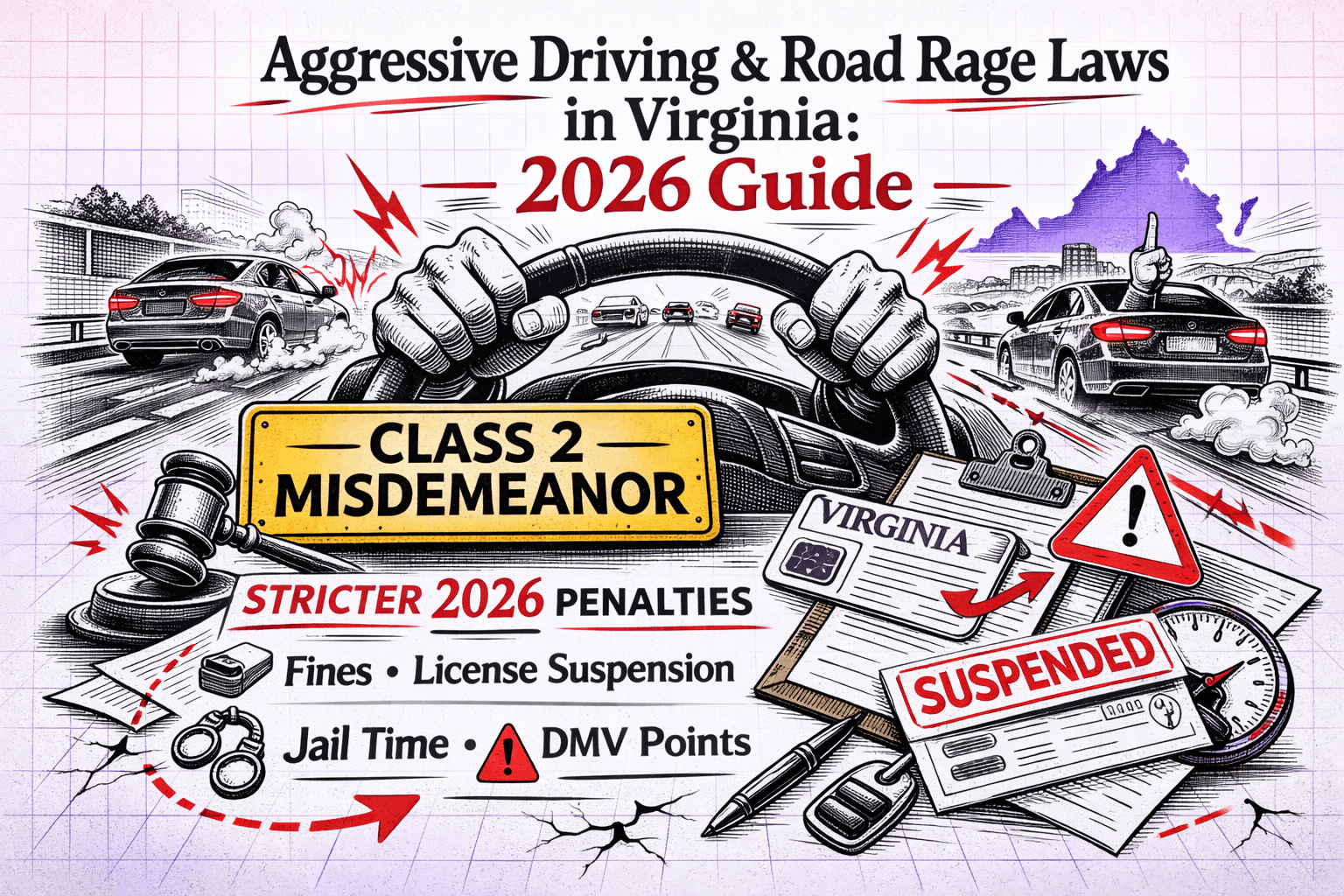
Aggressive driving in Virginia is classified as a Class 2 misdemeanor, one of the more serious traffic offenses. The penalties reflect the severity with which Virginia treats this behavior:
Fines: Up to $250 for a first offense
Jail time: Up to one month in jail (12 months possible for subsequent offenses)
Demerit points: Up to four demerit points on your driving record
Driving record impact: A conviction for aggressive driving remains on your record for years
Insurance consequences: Your auto insurance rates will likely increase significantly
Employment impact: For commercial drivers or those in safety-sensitive positions, this conviction can affect employment
If aggressive driving leads to an accident or causes property damage, additional charges and penalties may apply, escalating the severity of the situation dramatically.
The Escalation of Road Rage: When Aggressive Driving Becomes Dangerous
Road rage is an informal term that describes the escalation of aggressive driving into more serious confrontations. While Virginia law specifically addresses aggressive driving, understanding how road rage develops is important for prevention.
Road rage typically escalates in stages:
Stage 1: Initial Trigger – A driver experiences a triggering event (being cut off, someone honking, a perceived slight), which initiates frustration or anger.
Stage 2: Aggressive Response – The frustrated driver responds with aggressive driving behaviors (tailgating, honking, brake checking) intending to intimidate or annoy the other driver.
Stage 3: Escalation – The other driver responds to the aggression, either by responding aggressively in return or attempting to escape, which further escalates the situation.
Stage 4: Dangerous Confrontation – The situation deteriorates into dangerous driving (excessive speeding, blocking lanes, forcing the other vehicle off the road) or even physical confrontation at traffic stops or rest areas.
At this final stage, incidents can result not only in aggressive driving charges but also assault charges, hit-and-run charges, or worse. Road rage incidents have tragically resulted in deaths, serious injuries, and lifetime legal consequences for all involved.
Real-World Examples of Aggressive Driving in Virginia
To better understand what constitutes aggressive driving, consider these realistic scenarios:
Scenario 1 - Tailgating with Intent: You're driving on I-64 when another driver cuts you off. Angry, you accelerate, pull directly behind them, and flash your high beams repeatedly to intimidate them. This is aggressive driving—you've intentionally demonstrated behavior designed to intimidate.
Scenario 2 - Blocking: You're on a two-lane highway and a driver approaches from behind wanting to pass. You intentionally speed up and move toward the center line to prevent them from passing, making rude gestures. This is aggressive driving—you're deliberately obstructing their vehicle with intent to harass.
Scenario 3 - Excessive Honking: A driver accidentally drifts into your lane momentarily. Rather than letting it go, you follow them, honk repeatedly and excessively for a prolonged period, and make obscene gestures. This would likely be considered aggressive driving.
Scenario 4 - Brake Checking: You're annoyed with a tailgater, so you suddenly brake hard to startle them. Your brakes weren't malfunctioning—you deliberately applied them to scare the other driver. This is classic aggressive driving behavior.
Prevention: De-escalation and Emotional Control
The best way to avoid aggressive driving charges is to prevent the impulse in the first place. Here are proven strategies for staying calm and safe on Virginia roads:
Recognize triggers: Identify what typically makes you angry while driving (being cut off, slow drivers, traffic) and prepare mental strategies to handle these situations
Practice deep breathing: When you feel frustration building, take deep breaths to calm your nervous system
Increase following distance: Maintain at least three seconds of following distance. This gives you more reaction time and reduces the likelihood of close calls that trigger aggression
Leave early: When you're not rushed, you're less likely to become frustrated with traffic delays
Avoid confrontation: If another driver is driving aggressively toward you, let them pass and create distance. Your safety is more important than your ego
Don't engage: Never respond to aggressive driving with your own aggressive behavior, no matter how provoked you feel
Use music to stay calm: Listen to calming music or podcasts that keep you in a positive mindset
Report serious aggression: If another driver is extremely aggressive or dangerous, pull over in a safe location and contact law enforcement with their license plate information
The Role of Driver Improvement Education
Many drivers who engage in aggressive driving don't recognize how their behavior affects others or understand the serious legal consequences. Comprehensive driver education addresses the psychology of aggressive driving and provides strategies for behavioral change.
ABC Driving Improvement's Virginia DMV-approved 8-hour online driver improvement course includes detailed coverage of aggressive driving, road rage prevention, and techniques for maintaining composure on the road. The course helps drivers understand not only what the law forbids, but why these behaviors are dangerous and how to develop safer driving habits.
Whether you've received an aggressive driving citation or simply want to improve your driving habits, this course provides valuable perspective and practical tools for change.
Consequences Beyond Legal Penalties
While the legal penalties for aggressive driving in Virginia are significant, the broader consequences can be even more impactful:
Criminal record: An aggressive driving conviction is a misdemeanor that appears on your background check, affecting employment opportunities and housing applications
Insurance costs: Your auto insurance premiums will increase substantially, potentially for years
Psychological impact: Engaging in aggressive driving often escalates your stress and anxiety while driving, making driving less enjoyable and more stressful
Danger to yourself and others: Aggressive driving significantly increases the likelihood of accidents that injure or kill you or others
Relationship damage: Road rage incidents involving family members or acquaintances can permanently damage relationships
What to Do If You're Cited for Aggressive Driving
If you receive an aggressive driving citation in Virginia:
Don't ignore it: Failing to respond to a citation can result in additional charges and license suspension
Consider your options: You may be able to negotiate with the prosecutor, attend driver improvement courses to reduce charges, or contest the citation in court
Take a driver improvement course: Completing an approved course before your court date demonstrates to the judge that you're taking the violation seriously
Consult with an attorney: For serious cases or if an accident resulted from the incident, consulting with a traffic attorney may be worthwhile
Conclusion: Choose Safe, Calm Driving
Virginia's aggressive driving laws are clear, and the penalties are serious. More importantly, aggressive driving puts you and everyone on the road at risk of injury or death. The solution is straightforward: recognize your triggers, develop strategies for staying calm, and choose to respond to frustration with patience and safe driving instead of aggression.
If you want to deepen your understanding of Virginia's traffic laws and develop better coping strategies for stressful driving situations, ABC Driving Improvement offers an approved, affordable 8-hour online course specifically designed for Virginia drivers. For just $74.99, you'll gain valuable insights and practical tools for safer driving. Visit abcdrivingcourse.com today to enroll and start your journey toward calmer, safer driving.
Dismiss Your Ticket Online
Virginia DMV-approved 8-hour driver improvement clinic. Complete at your own pace from any device.
Start Course — $74.99Why Choose ABC Driving Improvement?
Official Virginia clinic
Complete at your own pace, 24/7
Virginia drivers served
Based on verified reviews
Which Course Code Do You Need?
Check your court paperwork or DMV letter for your assigned code.
Get Your Certificate