Preparing for Your Virginia Traffic Court Appearance
Get Your CertificatePrepare for Virginia traffic court with our guide. Learn what to wear, bring, and say to maximize your chances of a dismissal or reduced charges.
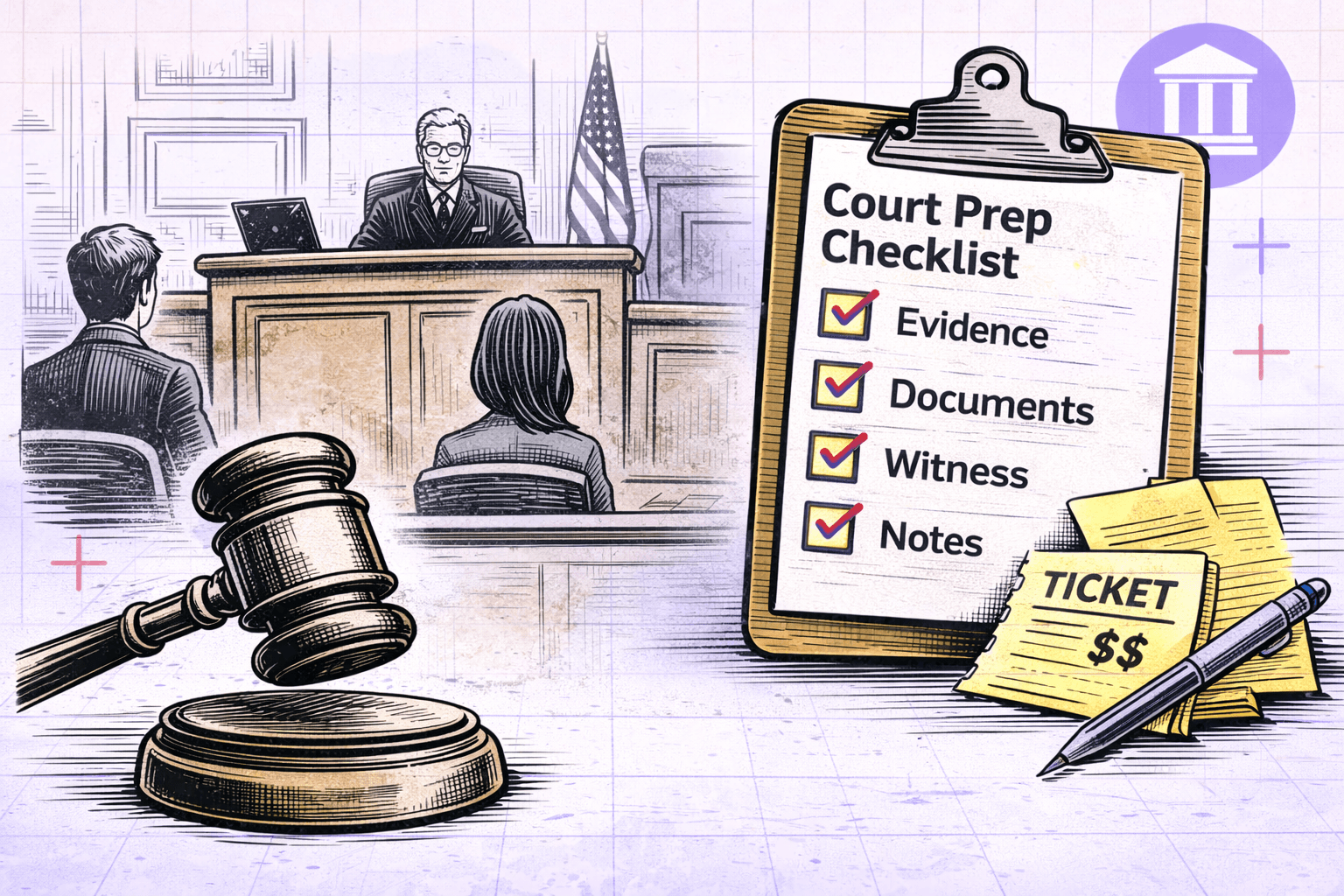
VA Traffic Court Success: A Complete Prep Guide
Walking into traffic court unprepared is one of the biggest mistakes Virginia drivers make when facing citations. The difference between a favorable outcome—reduced charges, minimal fines, or even complete dismissal—and the worst-case scenario often comes down to preparation. Judges notice which defendants took their court appearance seriously enough to prepare properly, and those defendants consistently receive better treatment than those who show up hoping for the best without any strategy.
Whether you're facing a simple speeding ticket or a serious reckless driving charge, proper preparation dramatically improves your chances of a positive outcome. This comprehensive guide walks you through every aspect of preparing for your Virginia traffic court appearance, from what to bring and how to dress to what to say and how to present your case most effectively.
Understanding Virginia Traffic Court Procedures
Before you can prepare effectively, you need to understand how Virginia traffic courts operate and what you'll encounter on your court date.
Court Types and Jurisdictions
Virginia traffic cases are typically heard in General District Courts, which handle misdemeanor criminal cases and civil matters under $25,000. These courts operate in every city and county throughout Virginia, and your ticket specifies which court has jurisdiction over your case based on where the violation occurred.
General District Court proceedings are less formal than Circuit Court trials but still require respectful behavior and proper decorum. There's no jury in traffic cases—a judge hears all evidence and makes decisions. The atmosphere is businesslike and moves quickly, with courts often processing dozens or hundreds of cases in a single session.
Some jurisdictions handle traffic cases during specific docket times, often morning or afternoon sessions dedicated entirely to traffic violations. Other courts mix traffic cases with other General District Court matters. Your summons indicates your scheduled court time, and you should plan to arrive at least 30 minutes early.
Typical Court Session Flow
Understanding what happens during a typical traffic court session helps you prepare mentally and strategically for your appearance.
Court sessions begin with the judge taking the bench and court staff calling the docket—announcing all cases scheduled for that session. When your name is called during docket call, you answer "present" or "here" to let the court know you've appeared. Failing to respond during docket call can result in your case being called out of order or potentially a failure to appear if the court doesn't realize you're present.
Before individual cases are heard, you may have opportunity to speak with the prosecutor or Commonwealth's Attorney. Many Virginia courts allow defendants to approach the prosecutor's table before the session begins to discuss possible plea agreements or charge reductions. This is when presenting your driver improvement certificate and negotiating for better outcomes happens. Not all courts follow this procedure, but where available, it's a valuable opportunity.
Cases are then called individually in the order the judge chooses. When your case is called, you approach the defendant's table or podium, state your name clearly, and wait for the judge to proceed. The officer who cited you may testify about the circumstances of your violation. You'll have opportunity to ask questions, present evidence, and make statements. The judge then renders a decision—guilty, not guilty, or some modified outcome.
After the judge's decision, you're informed of fines, points, and any other consequences. Court staff provide instructions for paying fines or satisfying other requirements. If you disagree with the decision, you typically have the right to appeal, though this requires posting a bond and following specific procedures within limited timeframes.
Essential Documents to Bring
Arriving at court with proper documentation demonstrates preparation and provides the evidence you need to support your case.
Mandatory Documents
Certain documents are absolutely required for any traffic court appearance.
Your citation or summons is the most critical document—bring the original ticket the officer gave you. This document contains your case number, court date, violation information, and other essential details the court uses to process your case. Without it, court staff may have difficulty locating your case file, potentially causing delays or complications.
Valid driver's license is required to prove your identity and demonstrate your current licensing status. The court needs to verify you're the person named on the summons and that you maintain proper licensing. If your license was suspended or revoked related to this case, bring documentation of that status as well.
Proof of insurance is often required, particularly if your violation involved questions about insurance status or if the court requires verification that you maintain proper coverage. Bring your current insurance card or policy declaration page showing coverage was active on the date of the violation.
Vehicle registration should be brought if your violation relates to the vehicle itself or if the court may question whether you're the vehicle's authorized operator. Registration proves your legal right to operate the vehicle cited.
Supporting Documents That Strengthen Your Case
Beyond mandatory documents, additional materials can significantly improve your outcome.
Driver improvement course completion certificate is perhaps the most valuable supporting document you can bring. Completing a Virginia DMV-approved driver improvement course before your court date and presenting the certificate demonstrates responsibility, shows you've taken corrective action, and often persuades judges to reduce or dismiss charges. ABC Driver Improvement delivers completion certificates within 24 hours, allowing you to complete the course days before your court date and arrive with certificate in hand.
Official driving record transcript from Virginia DMV showing your complete violation history proves your claim of a clean record if that's your situation. Courts give more lenient treatment to first-time offenders, but they need verification of your history. Request your transcript from the DMV at least a week before court to ensure it arrives in time. Bring multiple copies—one for yourself, one for the prosecutor, and one for the judge if requested.
Character reference letters from employers, community leaders, clergy, or others who can attest to your responsibility and good character can help in serious cases. These letters should be brief, professional, and focused on relevant character traits. One or two strong letters from credible sources carry more weight than five generic letters.
Speedometer calibration records are valuable if you're contesting a speeding charge based on your speedometer reading differently than the officer's measurement. You must have your speedometer professionally calibrated by a certified shop before court, and the calibration must show variance in your favor to help your case.
Photographic evidence of conditions at the violation location can support defenses based on unclear signage, obstructed views, or road conditions. Take clear, well-lit photos that show relevant details and bring multiple printed copies. Digital photos on your phone are less effective than professional prints presented to the judge.
Medical documentation supporting emergency circumstances claims must be official—hospital admission records, doctor's notes, or other legitimate medical documentation. Courts are skeptical of medical emergency claims without substantial proof.
Organization and Presentation
How you organize and present documents matters almost as much as what documents you bring.
Use a folder or binder to keep all documents organized and easily accessible. Fumbling through loose papers creates an impression of disorganization and wastes the court's time. Professional presentation suggests you're taking the matter seriously.
Bring multiple copies of key documents—your driving record, driver improvement certificate, and any supporting evidence. You may need to provide copies to the prosecutor, the judge, and court staff while keeping copies for yourself. Three to four copies of important documents ensures you're prepared for any request.
Create a simple one-page summary of your case including your understanding of the violation, key facts supporting your position, documents you're presenting, and the outcome you're requesting. This summary helps you stay organized during your presentation and can be provided to the judge if appropriate.
Appearance and Demeanor: First Impressions Matter
Judges form impressions quickly, and your appearance and demeanor significantly influence how they perceive you and your case.
Appropriate Courtroom Attire
Dressing appropriately for court shows respect for the legal system and suggests you take your appearance seriously.
Business professional or business casual attire is the standard for traffic court. Men should wear dress slacks or khakis with a collared shirt, preferably with a tie and jacket. Women should wear professional dresses, skirts with blouses, or dress pants with professional tops. Conservative, professional appearance makes positive impressions.
Avoid casual clothing entirely—no jeans, shorts, t-shirts, tank tops, athletic wear, or overly casual attire. Even nice jeans are too casual for court. What you might wear to a nice restaurant isn't necessarily appropriate for court—err on the side of more formal rather than less.
Footwear should be professional—dress shoes for men, professional shoes or modest heels for women. No sneakers, sandals, flip-flops, or overly casual footwear. Your shoes contribute to your overall professional appearance and shouldn't detract from it.
Grooming matters—neat, clean appearance with well-maintained hair, trimmed facial hair for men, and conservative makeup and accessories for women. Avoid extreme hairstyles, excessive jewelry, visible tattoos if possible, and anything that draws attention away from your respectful, professional presentation.
Remove hats before entering the courtroom and don't wear sunglasses indoors. These basic courtroom etiquette rules show respect for the court and demonstrate you understand proper decorum.
Behavioral Expectations
How you conduct yourself in court affects your outcome as significantly as what you say.
Arrive early—at least 30 minutes before your scheduled time. Traffic court dockets often run ahead of schedule, and arriving right at your scheduled time may mean you've already missed your case being called. Early arrival also gives you time to locate the correct courtroom, find parking, go through security, and settle your nerves.
Turn your cell phone completely off, not just to silent. Phones going off during court sessions anger judges and create terrible impressions. Even vibration sounds can be disruptive. Better yet, leave your phone in your car to eliminate any possibility of disruption.
Sit quietly and attentively while waiting for your case to be called. Don't talk, whisper, or create distractions. Pay attention to how the judge handles other cases to understand their temperament and preferences. Watch what works and what doesn't when other defendants present their cases.
Stand when addressing the judge or when the judge is speaking to you. This basic sign of respect is expected in all courtrooms. Remain standing until told you may sit or until your case concludes.
Address the judge as "Your Honor" every time you speak. This formal address shows proper respect for the court. Never call the judge "sir" or "ma'am" or use their name directly—"Your Honor" is the only appropriate address.
Speak clearly, calmly, and respectfully at all times. Even if you disagree with the judge's statements or the officer's testimony, maintain composure and speak professionally. Raising your voice, arguing, or showing disrespect virtually guarantees the worst possible outcome.
Listen carefully to questions and answer directly. Don't ramble, volunteer unnecessary information, or go off on tangents. When asked yes-or-no questions, answer yes or no and then briefly explain only if appropriate. Judges appreciate concise, direct answers.
Never interrupt the judge, prosecutor, or officer. Wait for them to finish speaking completely before you respond. If you need to object or disagree, wait for appropriate moments and raise concerns respectfully.
What to Say (and What Not to Say)
Your words in court can make or break your case. Knowing what to say and what to avoid is critical.
Effective Opening Statements
When your case is called and you have opportunity to speak, start strong with a respectful, well-prepared opening.
State your name clearly and acknowledge you're present for the case. "Good morning, Your Honor. My name is [Your Full Name] and I'm here regarding case number [your case number]." This professional introduction sets a positive tone.
If you've completed a driver improvement course, mention it immediately. "Your Honor, I've completed a Virginia driver improvement course since receiving this citation and would like to present my completion certificate." This proactive mention ensures the judge knows about your corrective action right away.
If requesting a specific outcome, state it clearly and respectfully. "Your Honor, I respectfully request consideration for reduced charges based on my clean driving record and the driver improvement course I've completed." Clear, direct requests help the judge understand what you're seeking.
Arguments That Work
Certain arguments and approaches resonate with Virginia traffic court judges and improve your chances of favorable outcomes.
Taking responsibility while explaining context works much better than making excuses. "Your Honor, I acknowledge I was driving faster than I should have been. I completed a driver improvement course to improve my driving skills and ensure this doesn't happen again. I respectfully ask for consideration based on my clean ten-year driving record." This approach shows maturity and responsibility while requesting leniency.
Emphasizing your clean driving record with documentation supporting your claim is highly effective. "Your Honor, I've been driving for 15 years without a single violation until this incident. I've brought my official driving record from the DMV showing this clean history." First-time offenders who prove their good history receive more favorable treatment.
Demonstrating corrective action through driver improvement course completion, vehicle repairs if relevant, or changed circumstances shows you've addressed whatever caused the violation. "Your Honor, I've completed a driver improvement course, had my speedometer calibrated and repaired, and changed my driving habits to prevent future violations." Tangible actions matter more than promises.
Highlighting consequences that would be particularly severe in your situation can generate sympathy if presented respectfully. "Your Honor, I'm a commercial driver and my livelihood depends on maintaining my license. I've taken this extremely seriously by completing driver improvement education and would be grateful for any consideration the court can provide." Don't exaggerate, but legitimate serious consequences can influence outcomes.
Arguments and Behaviors to Avoid
Many approaches that seem reasonable to defendants actually harm their cases and anger judges.
Never claim "everyone else was doing it" or "I was just keeping up with traffic." Judges have heard these excuses thousands of times and they carry zero weight. The fact that other drivers were speeding doesn't excuse your speeding. This argument suggests you don't take personal responsibility.
Don't blame the officer or suggest they were filling a quota. Statements like "the officer was just trying to make his monthly quota" or "he was hiding to catch people" make you look like you're deflecting responsibility. Judges generally trust their officers and view these accusations as excuse-making.
Avoid claiming speed limits are unreasonably low or that you disagree with traffic laws. "The speed limit on that road should be 65, not 55" isn't a legal defense and suggests you think you know better than traffic engineers and lawmakers. Even if speed limits seem arbitrary to you, they're the law and arguing against them helps nothing.
Don't minimize the violation with statements like "it's just a few miles over" or "it's not like I hurt anyone." These comments suggest you don't take the violation seriously and don't appreciate the safety risks your behavior created. Judges respond poorly to minimization.
Never lie or exaggerate circumstances. If you claim a medical emergency that didn't exist, invent details about road conditions, or misrepresent facts, you risk being caught in lies that destroy your credibility entirely. Honesty is essential even when the truth isn't flattering.
Avoid long-winded explanations or rambling stories. Judges handle dozens or hundreds of cases and appreciate concise presentations. Get to your point quickly, present your evidence, and make your request. Lengthy stories waste court time and try the judge's patience.
Negotiating with Prosecutors
Many Virginia courts allow defendants to speak with prosecutors before the court session begins. This is your opportunity to negotiate better outcomes.
Finding and Approaching the Prosecutor
Prosecutors or Commonwealth's Attorneys typically arrive at court before the session begins and make themselves available to defendants seeking to negotiate.
Look for the prosecutor at a table near the front of the courtroom, often reviewing files and speaking with defendants one at a time. Court staff can direct you to the prosecutor if you're unsure who they are. In some jurisdictions, prosecutors work from an office near the courtroom rather than in the courtroom itself.
Wait your turn patiently if other defendants are speaking with the prosecutor. Don't interrupt ongoing conversations or try to jump ahead of others. When it's your turn, approach professionally, introduce yourself, and state your case number.
Presenting Your Case to the Prosecutor
Your conversation with the prosecutor is essentially a mini-negotiation where you're trying to reach agreement on a favorable resolution.
Lead with your strongest points—driver improvement completion, clean driving record, or other factors supporting reduction or dismissal. "Good morning. My name is [Your Name], case number [number]. I completed a Virginia driver improvement course after receiving this citation and I have a clean 10-year driving record. I'd like to discuss the possibility of reducing this charge."
Present your driver improvement certificate and driving record immediately. Physical documentation makes stronger impressions than verbal claims. Hand the prosecutor copies of your key documents while keeping originals for yourself.
Ask specifically for what you want. "Would you consider reducing this to improper driving?" or "Would dismissal be possible given my clean record and course completion?" Clear requests are more likely to succeed than vague hoping the prosecutor will offer something.
Be prepared to accept reasonable offers even if they're not everything you wanted. If you're charged with reckless driving and the prosecutor offers reduction to speeding 15 over, that's a significantly better outcome worth accepting even though it's not complete dismissal. Prosecutors rarely negotiate multiple times—their first offer is often their final offer.
Thank the prosecutor regardless of outcome. If they agree to a reduction, express genuine gratitude. If they decline to reduce charges, thank them for their time and consideration. Professional courtesy throughout the process reflects well on you.
Common Negotiation Outcomes
Understanding typical negotiation results helps set realistic expectations.
Reckless driving reduced to improper driving is one of the most common and valuable negotiations. This changes your charge from a criminal misdemeanor to a traffic infraction, reduces points from 6 to 3, and dramatically decreases insurance impact. Prosecutors often agree to this reduction for first-time offenders with clean records who complete driver improvement courses.
Speeding charges reduced by a few miles per hour can drop you into lower point categories or simply reduce fines. Changing a 4-point violation to a 3-point violation helps your insurance rates and keeps you further from suspension thresholds.
Complete dismissal in exchange for driver improvement course completion happens in some jurisdictions for minor first-time violations. This is essentially deferred disposition negotiated with the prosecutor rather than ordered by the judge.
Reduced fines in exchange for guilty pleas may be offered when charge reduction isn't possible but the prosecutor wants to resolve cases efficiently. Lower fines still mean a conviction but reduce immediate financial impact.
Working with Your Attorney (If You Hired One)
For serious charges like reckless driving, many defendants hire traffic attorneys. Understanding how to work effectively with your attorney maximizes the value of their representation.
Before Court Day
Prepare thoroughly with your attorney before your court appearance to ensure you're both aligned on strategy and expectations.
Provide your attorney with all relevant information—the citation, your driving record, any driver improvement course completion, and details about the violation circumstances. Complete disclosure helps your attorney develop the best strategy and avoid surprises in court.
Discuss realistic outcomes based on your attorney's experience with your specific court and judge. Experienced traffic attorneys know how different judges typically handle various violations and can set accurate expectations.
Understand the strategy your attorney plans to use—whether they'll negotiate with the prosecutor, request a trial, present specific defenses, or pursue another approach. Knowing the plan helps you prepare mentally and understand what's happening during your court appearance.
Ask whether you need to appear or if your attorney can handle the case without you. In many Virginia traffic cases, attorneys can appear on behalf of clients for everything except certain serious charges. Not having to appear saves you time away from work and reduces stress.
During Court
If you attend court with your attorney, follow their lead completely and don't speak unless instructed to do so.
Let your attorney handle all communication with the prosecutor and judge unless you're specifically asked to speak. Your attorney knows courtroom protocol, local procedures, and effective arguments. Trust their expertise and experience.
If your attorney asks you to answer questions, respond concisely and honestly. Don't elaborate beyond what's asked or volunteer additional information your attorney hasn't requested. Follow their lead in all communications.
Maintain professional appearance and demeanor even though your attorney is handling the legal aspects. The judge still forms impressions of you based on how you present yourself, and those impressions can influence outcomes.
After Your Court Appearance
Understanding post-court procedures ensures you complete all requirements properly and avoid additional complications.
If You Receive a Favorable Outcome
Successful outcomes require proper follow-through to ensure you receive all benefits.
If charges were reduced or dismissed, verify the court records reflect the correct outcome. Sometimes clerical errors occur where dismissals aren't properly recorded or reductions are entered incorrectly. Request written confirmation of the final disposition.
Pay any fines or costs by the specified deadline. Even with reduced charges or deferred dispositions, you typically owe court costs. Failing to pay on time can result in additional penalties or license suspension.
Complete any requirements the judge ordered—driver improvement courses, community service, or other conditions. If you've already completed a driver improvement course, ensure the court received your certificate and recorded your compliance.
Submit your completion certificate to your insurance company if you haven't already. Even if your case was dismissed or reduced, driver improvement completion qualifies you for insurance discounts that can save hundreds of dollars.
If You Receive an Unfavorable Outcome
Less favorable outcomes require different actions to minimize damage and protect your rights.
Understand your appeal rights if you believe the outcome was unjust. You typically have 10 days to file a notice of appeal to Circuit Court for a new trial. Appeals require posting a bond and following specific procedures. Consult with an attorney before pursuing appeals.
Pay fines promptly to avoid additional penalties. Even if you disagree with the outcome, unpaid fines lead to license suspension, collections, and worsening consequences. Pay what you owe while pursuing other remedies if appropriate.
Complete any court-ordered requirements like driver improvement courses even if you believe they're unnecessary. Failing to comply results in additional charges and further complicates your situation.
Consider completing a driver improvement course even if not ordered if you haven't already done so. Earning 5 safe driving points offsets the demerit points from your conviction and helps prevent future problems if you receive additional violations.
Maximize Your Success with ABC Driver Improvement
Completing a driver improvement course before court is the single most effective preparation step Virginia drivers can take. ABC Driver Improvement makes this essential preparation easy, convenient, and affordable.
Our Virginia DMV-approved course provides the completion certificate judges want to see when considering charge reductions, dismissals, or leniency. Prosecutors view our certificates as evidence of responsibility and genuine commitment to improvement. Courts throughout Virginia recognize and accept our completion certificates.
The 5 safe driving points you earn through our course immediately offset demerit points from violations, reducing your net point total and protecting against suspension. This benefit continues for five years, providing long-term value beyond your immediate court appearance.
Our 100% online format means you can complete the course entirely from home on your own schedule. No need to block out full days or travel to classroom locations. Work at your own pace across multiple sessions, completing the 8-hour requirement whenever convenient for you.
Fast certificate delivery within 24 hours ensures you have documentation ready for court even if you complete the course just days before your appearance. Our quick processing prevents last-minute stress about whether your certificate will arrive in time.
At just $74.99 with no hidden fees, our course is an affordable investment that often leads to savings of thousands through reduced charges and lower insurance rates. The return on investment is exceptional whether measured in financial terms or improved outcomes.
Don't walk into court unprepared. Complete ABC Driver Improvement's course and bring the certificate judges want to see. Give yourself every possible advantage for the best outcome.
Prepare for Court Success - Enroll Now $74.99 →
Contact ABC Driver Improvement
Questions about preparing for court or how our course helps?
Phone: (804) 223-2038
Email: contact@abcdrivingcourse.com
Website: www.abcdrivingcourse.com
Our team can answer your questions about using our completion certificate in court, what judges look for, and how to maximize your chances of favorable outcomes. We've helped thousands of Virginia drivers achieve better court results through proper preparation. Call us today.
ABC Driver Improvement's Virginia DMV-approved driver improvement course is essential preparation for traffic court appearances. Judges view completion favorably and often reduce or dismiss charges when defendants present our certificates. Our 8-hour online course earns you 5 safe driving points, costs just $74.99, and delivers certificates within 24 hours. Prepare properly for court and improve your outcome—enroll today.
Dismiss Your Ticket Online
Virginia DMV-approved 8-hour driver improvement clinic. Complete at your own pace from any device.
Start Course — $74.99Why Choose ABC Driving Improvement?
Official Virginia clinic
Complete at your own pace, 24/7
Virginia drivers served
Based on verified reviews
Which Course Code Do You Need?
Check your court paperwork or DMV letter for your assigned code.
Get Your Certificate