Hit by an Uninsured Driver in Virginia: What to Do
Get Your CertificateComplete guide on how to handle being hit by an uninsured driver in Virginia, including claims, legal options, and protection strategies.
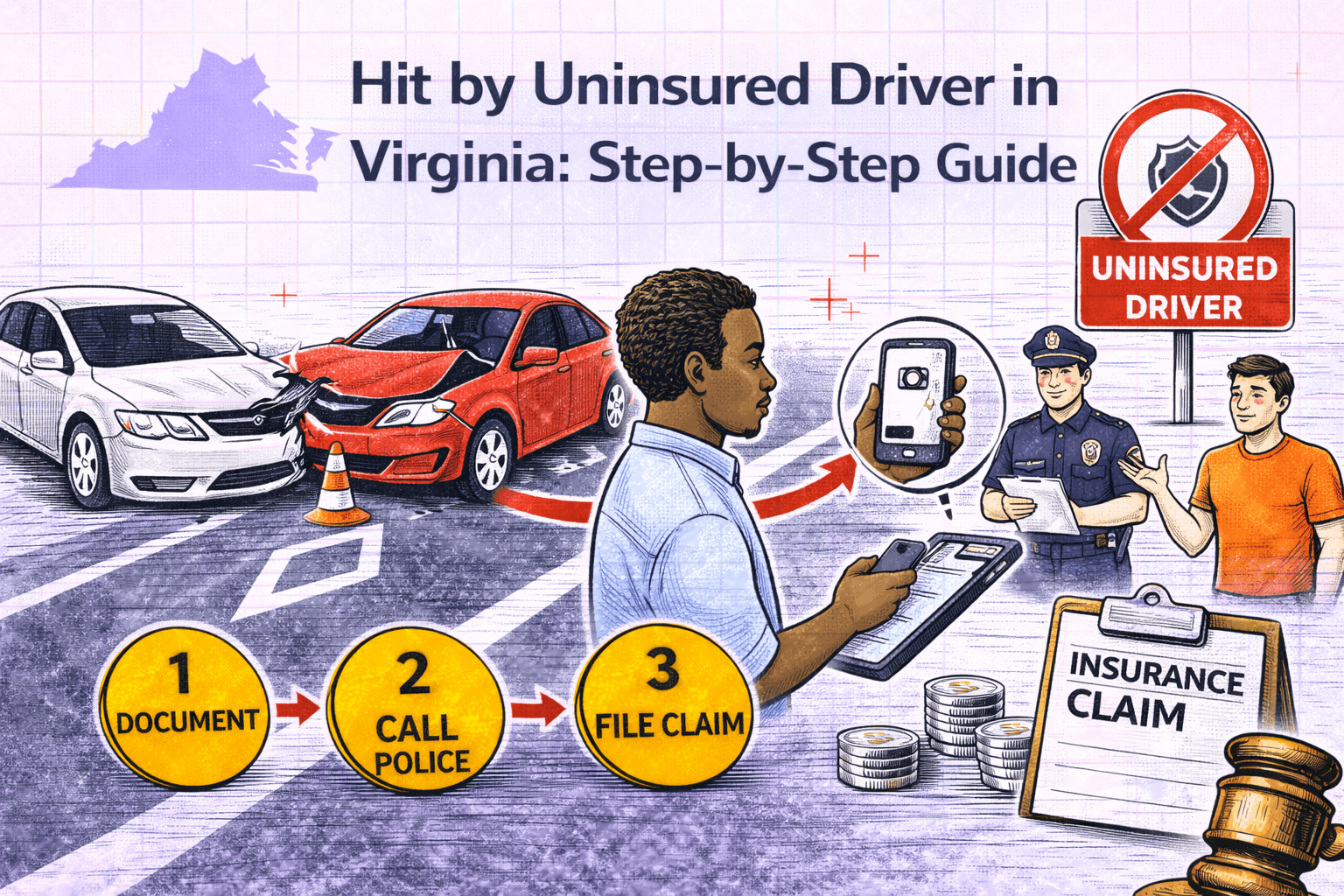
Understanding Virginia's Uninsured Motorist Problem
Imagine this scenario: You're driving safely on a Virginia highway when another vehicle runs a red light and crashes into you. Your car is totaled, you're injured, and medical bills are mounting. Then you discover the at-fault driver has no car insurance. You're left wondering how you'll pay for repairs, medical treatment, and lost wages. This nightmare happens to thousands of Virginia drivers every year.
Approximately 10-12% of Virginia drivers operate vehicles without insurance despite it being required by law. When these uninsured drivers cause accidents, they leave victims in financial and legal limbo. Understanding your rights, your insurance options, and your legal remedies is critical for protecting yourself financially.
Virginia's Uninsured Motorist Fee: A Unique Financial Burden
Virginia's approach to uninsured drivers is unique. The state charges an annual "uninsured motorist fee" of $500 per year—not to be confused with an insurance policy. This fee:
Is required even if you don't own a vehicle (if you have a valid license)
Does NOT provide any insurance coverage or protection
Is a legal penalty for driving without liability insurance
Is not an insurance contract, so it doesn't cover accidents
Accumulates annually for non-compliance
Despite the $500 annual fee, some drivers still operate without traditional liability insurance, creating significant risk for accident victims.
What to Do Immediately After Being Hit by an Uninsured Driver
Ensure Your Safety
Your first priority after any accident is safety:
Check for injuries: Assess yourself, passengers, and anyone else involved
Move to safety: If possible and safe, move vehicles out of traffic
Activate hazard lights: Alert other drivers to the accident scene
Call 911 if needed: Summon police and medical assistance for serious injuries
Call the Police
Always report the accident to police, even if it seems minor. A police report is crucial evidence when dealing with an uninsured driver:
Provides official documentation: The police report is more credible than your word against the other driver's
Establishes fault: Police can determine who caused the accident based on evidence and witness statements
Protects you legally: Creates an official record if the other driver later disputes the facts
Helps with insurance claims: Your insurance company will use the report to support your claim
Required for some claims: Your insurance company may require a police report for uninsured motorist claims
Gather Evidence at the Scene
Collect as much information as possible while at the accident scene:
Photos and video: Take photos of vehicle damage, accident scene, road conditions, traffic signals, and street signs. Record video if possible.
Other driver's information: Get their name, address, phone number, license number, and vehicle information
Insurance information: Ask about their insurance. If they say they have no insurance, note this. Do not accept vague responses.
Witness information: Get names and contact information for anyone who saw the accident
Police report number: Get the case number from the police report
Accident scene details: Note weather, traffic conditions, time of day, and location details
Seek Medical Attention
Even if you feel fine immediately after the accident, see a medical professional:
Hidden injuries: Adrenaline can mask injuries that emerge hours or days later
Documentation: Medical records prove injuries were caused by the accident
Future claims: You need medical documentation to claim injury damages
Whiplash and delayed pain: Many accident injuries don't become apparent immediately
Your Insurance Options: Uninsured Motorist Coverage
What Is Uninsured Motorist Coverage?
Uninsured motorist (UM) coverage is insurance protection you purchase for yourself to cover damages when you're hit by an uninsured or underinsured driver. It covers:
Medical expenses for your injuries
Lost wages from missed work
Pain and suffering damages
Property damage to your vehicle (if you have uninsured motorist property damage coverage)
UM coverage is optional in Virginia but highly recommended, especially given the number of uninsured drivers on the road.
Filing an Uninsured Motorist Claim
If you have UM coverage, here's how to file a claim:
Contact your insurance agent: Call your insurance company's claims department immediately
Provide all documentation: Give them the police report, medical records, photos, and evidence
Cooperate with the investigation: The insurance company will investigate the accident
Submit medical records: Provide all medical documentation related to injuries
Document damages: Keep receipts for repairs, medical treatment, and other accident-related expenses
Your insurance company will evaluate the accident and determine the extent of coverage available under your policy limits.
Policy Limits and Coverage Maximums
UM coverage has policy limits—the maximum amount your insurer will pay for damages. Common limits are:
$25,000 per person / $50,000 per accident
$50,000 per person / $100,000 per accident
$100,000 per person / $300,000 per accident
If your damages exceed these limits, you'd need to pursue legal action against the at-fault driver for the remaining amount.
Suing the At-Fault Uninsured Driver Directly
When You Can Sue
You have the legal right to sue an uninsured driver directly in civil court to recover damages for:
Medical expenses
Property damage to your vehicle
Lost wages
Pain and suffering
Other accident-related costs
This is separate from insurance claims and allows you to pursue damages directly from the at-fault party.
The Challenge: Judgment vs. Collection
While you can sue and potentially win a judgment against the uninsured driver, there's a critical issue: collection. You may win your case and receive a judgment for $50,000, but if the defendant has no assets, job, or income, collecting that judgment becomes extremely difficult. The reality is:
Many judgments go uncollected: Uninsured drivers often lack the financial resources to pay judgments
Wage garnishment: You can garnish their wages, but only if they're employed
Asset seizure: You can place liens on property they own
Bank account levies: You can pursue bank accounts, but many uninsured drivers have minimal savings
Time and costs: Collection efforts require additional legal work and expenses
While a lawsuit may be legally successful, it may be practically unsuccessful if the defendant lacks resources to pay.
When to Pursue Legal Action
Consider suing if:
Your damages exceed your insurance coverage limits
You have significant medical expenses or lost wages
The at-fault driver has assets or steady employment (wage garnishment potential)
Your injuries are serious and long-term
You're willing to invest time and legal fees in collection efforts
What If You Don't Have Uninsured Motorist Coverage?
If you don't have UM coverage, your options are more limited but not non-existent:
Sue the at-fault driver: You can still pursue a personal injury lawsuit, but collection may be difficult
Your own health insurance: Your health insurance may cover medical expenses (though this leaves you responsible for vehicle repairs and other costs)
Small claims court: For minor damage under the small claims threshold, you can pursue claims without an attorney
Payment plans: Work with medical providers and repair shops on payment arrangements
Absorption of costs: Unfortunately, if the driver truly has no assets or income, you may absorb the losses
This scenario emphasizes the importance of having adequate insurance coverage, including UM protection.
Virginia's Minimum Insurance Requirements
To legally drive in Virginia, you must carry minimum liability insurance:
Bodily injury liability: $25,000 per person, $50,000 per accident
Property damage liability: $20,000 per accident
These minimums mean drivers are legally required to carry insurance to cover these amounts if they cause an accident. However, many drivers either ignore this requirement or only carry the minimum, which may be insufficient for serious accidents. This is why your own UM coverage is so important—it protects you when others fail to maintain adequate coverage.
Protecting Yourself: What You Should Do Now
Review Your Insurance Coverage
Contact your insurance agent and review your policy to ensure you have:
Uninsured motorist bodily injury coverage: At least $100,000 per person / $300,000 per accident is recommended
Uninsured motorist property damage coverage: Covers vehicle damage caused by uninsured drivers
Underinsured motorist coverage: Protects you if the at-fault driver's insurance limits are insufficient
Comprehensive and collision coverage: Covers damage to your own vehicle regardless of fault
Maintain Proper Documentation
Keep records of:
Your current insurance policy and coverage limits
Insurance company contact information
Your policy number and agent contact details
Emergency contact numbers for your insurance company
Be Prepared for an Accident
Create an accident information kit for your vehicle containing:
Insurance company contact information
Your policy number
Phone numbers for emergency services
A pen and notepad for recording information
Your driver's license copy
Uninsured Driver Statistics in Virginia
Understanding the scope of the problem emphasizes the need for protection:
Percentage of uninsured drivers: Approximately 10-12% of Virginia drivers operate without insurance
That means: On any Virginia highway, roughly 1 in 10 vehicles may be uninsured
Geographic variation: Uninsured rates are higher in certain urban areas and among younger drivers
Rising trend: Uninsured driving rates have been increasing, making adequate insurance coverage more important than ever
Common Mistakes After Hitting an Uninsured Driver
Accepting Cash Settlements
Never accept cash from an uninsured driver on the spot for damages. You may think you're resolving the matter quickly, but:
The cash amount will likely be inadequate for serious damages
You won't have legal recourse if injuries develop later
There's no documentation to prove the settlement was made
You may later regret the decision when actual damages exceed the cash payment
Not Reporting to Police
Some drivers skip police reports to avoid hassles, but this is a critical mistake:
Insurance companies often require police reports for claims
Without a police report, it becomes your word against the other driver's
The police report establishes fault and provides official documentation
Legal action is much more difficult without a police report
Delaying Medical Treatment
Waiting to seek medical care creates problems:
It looks like injuries weren't serious
Insurance companies may deny claims for delayed treatment
Injuries may worsen without proper treatment
Medical documentation is harder to establish if there's a gap between the accident and treatment
Not Having Adequate Insurance Coverage
This is perhaps the biggest mistake Virginia drivers make—operating with minimal or no insurance coverage. Given the 10-12% uninsured driver rate, you need robust UM protection.
Moving Forward After an Accident with an Uninsured Driver
Being hit by an uninsured driver is frustrating and financially stressful, but understanding your options puts you in control. Whether through your own insurance company's UM coverage or legal action against the at-fault driver, paths to recovery exist. The key is preparation and documentation.
Beyond handling a specific accident, focus on ongoing safety to prevent accidents in the first place. ABC Driving Improvement's Virginia DMV-approved defensive driving course teaches techniques to avoid accidents altogether. Our 8-hour, 100% online program covers hazard awareness, defensive positioning, evasive maneuvers, and decision-making skills that help you avoid dangerous situations and uninsured drivers.
For just $74.99, you can gain comprehensive defensive driving education that protects you and your family on Virginia's roads. Enroll in ABC Driving Improvement today and invest in your safety and peace of mind.
Dismiss Your Ticket Online
Virginia DMV-approved 8-hour driver improvement clinic. Complete at your own pace from any device.
Start Course — $74.99Why Choose ABC Driving Improvement?
Official Virginia clinic
Complete at your own pace, 24/7
Virginia drivers served
Based on verified reviews
Which Course Code Do You Need?
Check your court paperwork or DMV letter for your assigned code.
Get Your Certificate